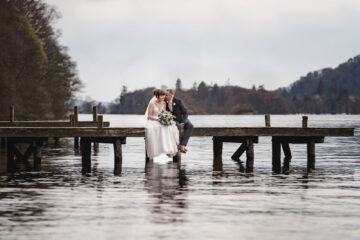
It’s a common misconception that buying an engagement or wedding ring on a budget means you can’t buy sustainably and ethically. English Wedding members Jacqueline & Edward are here to bust that myth and show you how you how you can buy affordably without compromising on quality or your eco values.

How to Buy an Affordable Engagement Ring

A grandmotherly wedding guest is inspecting a bride's ring at close quarters while other guests peer over her shoulder to see.

Photograph by Piccolino Weddings

Buying an Ethical Engagement or Wedding Ring on a Budget, by Jacqueline & Edward

Here’s our guide on how to get an affordable yet beautiful, ethical, made to order engagement ring… 

  1. Use a stand-in gemstone (for example, cubic zirconia or Moissanite) with the option to replace it with a diamond of the same size when you are ready.
  1. Try our Proposal Ring – this is a stand-in ring you can use to propose with and costs just £200. We have three package options to choose from and the great thing about the Proposal Ring is, you can then trade it in and get £200 off either one of our made to order engagement rings or a bespoke engagement ring.

The Proposal Ring still uses ethical metal and you can re-use some of the ring in your final forever ring if you want to, capturing that perfect moment forever.

  1. Consider lab grown diamonds or moissanite as an alternative to natural diamonds – they have a lower price point, are visually almost identical and provide an interesting ethical alternative.  For example, moissanite is intrinsically linked to space, the natural form of which was first identified in association with a meteorite impact crater.
  1. When it comes to metals, they aren’t all equal! Yellow Gold is the least expensive option. The carat of the gold also makes a difference to price but all our rings are made from 18ct gold.
  1. Having gemstones in the shoulders of the ring adds expense but these can be added at a later date – maybe as an alternative to an eternity ring to mark your one-year anniversary.  Just tell Jacqueline & Edward if this is something you’d like to do and we will make your engagement ring with this in mind.
  1. Uncertified diamonds and salt and pepper diamonds are a more affordable way to incorporate natural diamonds into your ring.  Uncertified diamonds are simply diamonds that haven’t been certified by an independent body such as GIA (Gemological Institute of America) or IGI (International Gemological Institute).  They are graded by the supplier of the diamond therefore saving the cost of being sent off to be officially graded and the associated uplift in price. We also double check this grading ourselves.  

Salt and pepper diamonds are all unique in relation to their internal colours and patterns, making them an intriguing alternative.

  1. If you don’t want diamonds in your engagement ring but prefer rubies or emeralds, consider lab grown rubies or emeralds instead. They tend to be more vivid, and typically have higher clarity than natural rubies. For more affordable coloured gemstones, lab grown is the way to go and from an ethical perspective, they are conflict free, having not been mined.
  1. If you’re a sentimentalist, you can use family gold, for example, heirloom jewellery, to either create your engagement ring, or just to offset the cost and recycle (we will recycle the gold). This keeps your metal costs lower and you’ll get to treasure some truly recycled, ethical, and sentimental jewellery.
  1. You can spread the cost of your ring with us either using Klarna (three equal payments) or we can split the cost of your engagement ring into two equal instalments, free of charge, and with no interest applied – just email Jacqueline & Edward to ask!
  1. Buying an ethical engagement ring doesn’t have to cost thousands, take a look at our beautiful range of classic, elegant rings for less than £1,000:

silver wedding or engagement ring by ethical UK jewellers Jacqueline and Edward

The Almond: Recycled 18ct Yellow Gold Engagement Ring with Moissanite Stone – £881

The Bohaun: Recycled 18ct Yellow Gold Engagement Ring with Moissanite Stone – £478

The Keltie: 18ct Yellow Gold Engagement Ring with Moissanite Stone – £835

The Kinglass: 18ct Yellow Gold Ring with Moissanite Stone – £415

Shop the full range of engagement rings here

Choosing Affordable Wedding Rings 

So you’re engaged! Now comes the excitement of organising a wedding. To help you find the perfect, ethical wedding ring at an affordable price, consider these helpful tips…

Wedding ring in a handmade wooden box by Jacqueline and Edward

  1. Go traditional! Intricate inlays and skillful Mokume Gane rings are unique and eye-catching, but traditionally designed wedding rings hold an ancient and timeless appeal as well as being less expensive. 

slimline ethical white gold wedding ring by Jacqueline and Edward made in the UK

A perfect example is The Devon, one of our traditional court rings. If you’d like something more intricate like an inlay adding a later date let us know and we can incorporate your preferences and future-proof your rings. 

  1. Try a narrower width for your ring. This could reduce materials and the cost of your ring by up to £200. Widths start at 1.5mm. 
  1. You can consider having your wedding bands in 9ct or 14ct gold. 9ct gold has 50% less gold than 18ct gold and can therefore reduce cost. All the rings we make use 18ct gold but you can email us to get a quote for rings of your choice in 9ct or 14ct gold – all our rings are made to order so we are able to offer this unique service.  Furthermore, we even create a lot of our gold alloys ourselves in-house.
  1. Choose a ‘classic’ instead of ‘heavy’ depth for your ring design. We already make our standard ‘classic’ depth to the same thickness as some jewellers ‘heavy’ rings – make sure you’re comparing apples with apples. Our classic depth is suitable and durable enough for all lifestyles.  
  1. If you want your wedding rings engraving but don’t want the added cost we can do this at any point in the future for you, so there’s no rush.
  1. You can contribute family gold to create your wedding rings too – either to offset costs or to directly recycle and reuse the metal. Jacqueline & Edward will keep your jewellery material costs lower and you’ll get to treasure some truly recycled, ethical, and sentimental wedding rings.  

Take a look at some of our ethical wedding rings (handmade made from recycled 18ct gold). All our rings are made to order and you’ll be surprised how affordable and competitively priced they are.

The Newlands: 18ct Yellow Gold Wedding Ring with Matt finish – £420

The Finglen: 18ct White Gold Wedding Ring with Honeycomb finish – £377

The Crossaig: 18ct Yellow Gold Channel Cut Wedding Ring with Etched finish – £400

channel cut ethical wedding ring by Jacqueline and Edward

Shop the full range of wedding rings

Spread the Cost

Look at spreading the cost of your rings to make payment more manageable and affordable. You can spread the cost of your ring with Jacqueline & Edward either using Klarna (three equal payments) or we can split the cost of your engagement ring into two equal instalments, free of charge, and with no interest applied – just email us to ask!

A Unique Touch 

All our rings are made with a small piece of river gold melted into the recycled metals. You get to choose the provenance of this gold, whether that be from the Scottish Highlands, Wales, Devon – anywhere has meaning for you. This small piece of gold is gifted to you from us and helps to make your ring truly special and unique.

So there you have it. You can have an ethical, artisan engagement or wedding ring on a budget!


Main photo by micheile dot com on Unsplash


Your upcoming wedding will be a dream, but it may also produce tons of trash. Decorations are an important way to bring your wedding vision to life, whether you DIY or buy them. But what happens to everything when the evening ends? Use these tips to avoid waste after your ceremony and have a green wedding that aligns with your sustainable values.

1. Recycle Paper Decor

A US study showed that couples spend an average of $2,141 for wedding decor, which lets them create the wedding aesthetic they’ve always wanted. It also leads to tons of single-use purchases. 

Recycle any paper decor you decide to use to avoid waste after the ceremony. Anyone who’s helping you can grab the paper signs, table markers, fans, and other decorations for a quick trip to your local recycling centre before you jet off to your honeymoon.

2. Use Biodegradable Dinnerware

Renting dinnerware for your reception is a great way to have a green wedding, but it isn’t your only option. If renting is too costly, look into biodegradable alternatives before you turn to disposable plastic. Your plates, cups, silverware, and serving dishes will break down more quickly in a landfill to minimise the lasting waste from your wedding day.

3. Preserve Your Flowers

Flowers are a traditional part of weddings, so you’re likely thinking about using them on your big day. They create bouquets, boutonnieres, and centrepieces that add a romantic touch to any venue. They’re also-single use decorations that require natural resources to exist for that short period.

Consider preserving your flowers to make their environmental impact worth the resources. There are many preservation methods you could choose from, but the quickest is microwaving your flowers. It may sound odd, but the heat preserves your flowers in perfect condition by saving their colour and shape. They’ll look lovely in shadow boxes, frames, and vases for a long time after your wedding ends.

Photo by Jonathan Borba on Unsplash

4. Sell Your Supplies

You don’t have to throw away everything you use for your wedding. Anything you don’t want to keep around your home can fulfil the dreams of other couples. List your decor for sale on virtual marketplaces to give them new life. You’ll get a fraction of your wedding budget back while helping other grooms and brides save money and the planet.

Photo by Annie Gray on Unsplash

5. Rent an Electric Car  

Your getaway car can be an essential part of your wedding. It will become the backdrop for some of your portraits and your photographer’s photos as you leave for your hotel. Unless you plan to bike off into the sunset, your getaway vehicle will burn fossil fuels to transport you and your partner.

Avoid that problem by renting an electric car for your wedding. You can use it to pick up your wedding party members and even get lunch while everyone gets ready for the ceremony. After your reception, you’ll avoid adding 8,882 grams of CO2 waste to the atmosphere for every gallon of petrol burned.

6. Donate Your Wedding Clothes

You might not think of wedding outfits as potential waste, but how often will you wear them? Just once – and maybe if you ever renew your vows in a decade or two. That counts as a single-use purchase, along with things like your bridesmaids’ dresses and your partner’s suit or gown.

Ask your wedding party members to donate their clothing with you after your ceremony. Giving them to local thrift stores will keep the clothes from becoming landfill waste. It’ll also help people who can’t afford to buy them at retail price. Everyone deserves a beautiful and fun wedding, no matter their budget.

Photo by Jonathan Borba on Unsplash

7. Buy Local Products

There are endless possibilities for your wedding decorations. You can pick a theme or season and get decorations that bring those things to life at your venue. However, many of those things will come from distant cities or countries.

Transporting and shipping goods requires burning fossil fuels. You’ll have a greener wedding by buying things that come from the area around your venue. Talk with your potential caterers and vendors to see where they source their products. You’ll support the local economy and reduce waste.

Buying local goods skips the shipping process, so you won’t throw away excess cardboard and cushioning materials. Personally pick up your flowers and decorations from nearby artists or get them hand-delivered. Your money won’t fund mass-production processes or pay for single-use shipping waste.

8. Only Buy What You Need

Avoiding waste also means avoiding unnecessary purchases. Sketch your venue to plan the exact decor you’ll need in every room. You won’t have leftover decorations that waste time, money, and natural resources to serve no purpose on your big day.

You can always prepare to donate or sell things later if you’re worried about accidentally getting more decorations than you plan on using. Mistakes happen, but there are always ways to help the planet and take care of waste.

Avoid Waste After Your Wedding

There are many ways to avoid waste after your wedding ceremony. Green weddings require a bit more thought and planning, but you’ll help the earth without compromising your wedding dreams. Think about what you’ll need to decorate your venue and how you’ll handle everything after your honeymoon to create a sustainable plan for your remaining decor.


Author bio: Cora Gold is the Editor-in-Chief of women’s lifestyle magazine, Revivalist. She has a passion for inspiring couples to plan the wedding of their dreams. Follow Cora on Facebook, Twitter and LinkedIn.

Header image by Jaye Peg Photography

Sustainable weddings, to us, means a happy experience and stress free planning. Sticking to a comfortable budget is a huge part of that.

If you haven’t been following our sustainable weddings series, you might want to check back or bookmark our recent months’ features:

    1. Weddings & Planet – don’t let your day be about ‘stuff’
    2. Weddings & mental health
    3. The elephant in the room: weddings’ carbon footprint
    4. Finding (or being) a sustainable wedding supplier

Let’s talk about wedding budgets

Today we wanted to talk about budgets. The wedding media focus way too much on ‘average wedding budget*’ figures (which we believe are massively distorted) – and this can put pressure on couples to spend more than necessary. This has an impact on mental health, on carbon footprint and on waste at weddings. Why? Because budgets dictate the size of a wedding. If you’re constantly told that a figure of £xxx is normal, you’re likely to be influenced by that in some way.

(In a very subtle way, we all compare ourselves to what’s normal. If you’re a thrifty couple or great at budgeting, perhaps you’ll subconsciously aim to spend about half of the ‘normal’ figure. If you’re both high earners, maybe you’ll think you’d probably spend 30% higher than ‘normal’. But here’s the rub: if someone behind a desk at a wedding magazine is deciding what ‘normal’ is, why should that figure mean anything at all?)


Let’s try something: with your partner, without showing each other, write down what each of you thinks your wedding might cost. Reveal your figures, compare and have a chat.

We’re guessing if one of you has been reading about weddings on websites, blogs or magazines, your figure will be higher.

If you have very different ideas about your wedding budget, there’s a lovely article on Green Union about how to compromise while planning your dream wedding. Working things out together so you’re both on the same page with budgets will help your wedding planning go smoothly. It’s something to do as a team, so agreeing what you can happily afford is really important.


Enough about what you should or shouldn’t spend. Weddings aren’t about money or budgets. Weddings are about celebration and fun – and that’s FREE.

Whatever your budget, high or low, it’s super important that weddings should be

  • Common sense spending – the key to keeping things stress-free
  • Save first. Give yourselves time and put money in the bank
  • Include a buffer ‘just in case’
  • Don’t borrow
  • Accept any financial gifts with grace (and caution – no strings!)
  • Block out pressure to overspend
  • Plan as a couple
  • Don’t buy wedding stuff just cos it’s wedding stuff! A wedding should be unique and about you
  • Full of personality. Make your day about YOU (two)!

As a part of the wedding media in the UK, we want to use our voice to bring a little balance. No one should feel pressure to aim their wedding budget towards a level of spend dictated by the press. Especially with the cost of living crisis we’re in right now, no one should even feel pressure to have a wedding at all. (Elope! Elopements are amazing. Or live together in love – married or not – weddings are optional!)

We want to be a part of a thriving industry which gives couples choice. That feels like a sustainable future for everyone.

And the key to a more sustainable approach to wedding budgets? Focus on personality. Plan and style your day around who you are – not what you see in the wedding media.

It’s all about being YOU. And for most of us, hiring a stately home for a weekend probably isn’t you. (Let alone booking a function / conference room in a hotel for a day.) Right from the start, try not to be swayed by perceptions of what a wedding ‘should’ be. Being yourselves might mean booking out your favourite pub for the afternoon, or having a party at home…

Starting points to help you frame some key wedding decisions around your personalities:

  • Think about your venue: where do you like to spend your time? Pubs? Camping? Airbnbs? Abroad? Countryside? With the use of an independent celebrant, could you have your wedding there?
  • Photographer: how important are photos to you both? How knowledgeable are you about photography? What style of photos do you love? Perhaps photography isn’t that important to you – and that’s fine. Our recommendation would be to hire a pro if you can afford one, but do shop around, and within your budget always choose based on quality and personality – not price!
  • Catering: forget standard wedding food! If formal dining and a sit down meal isn’t your thing, how about a vegan pizza van, picnic baskets, banquet or family style dining?
  • Styling: There are so many options from DIY, hire, having all of your family helping, or just using your venue’s own style. Making your wedding ‘you’ could mean splashing out on flowers, or spending on your outfits and keeping decor minimal. Or it could mean a picnic on hay bales at a local farm. Think about your home, and your friends’ homes. Could you grow lavender in little pots for a year and use that for table styling? Plants are super sustainable for wedding decor if they live on after the big day!
  • Your outfits: Balance dressing up and wow factor with feeling comfortable. (We’re not just talking about dresses!) A white dress and hire suit are NOT your only options! (Until the 1980s, people just wore their best outfit to get married in. They didn’t buy new, let alone spend £££ on a dress to wear once!) So think about your culture? Charity? Borrow outfits or just be creative. Most of all be You
  • Guests: the size of your wedding has a big financial impact. Micro is cool now. Be comfortable rather than showy – smaller weddings generally have more personality!

We’re huge fans of sustainable wedding website Green Union, and we wanted to share some words of wisdom we found on there:

Go through your wedding planning list to see where you could make savings. Eco-friendly favours are a great idea, as is using sustainable decor, including many items you might have around your home like books. Making some changes will help you limit waste, and can help you get better value for your money too.

By making some eco-friendly changes to your wedding, you can enjoy savings that can be put towards other elements, or even your honeymoon. Even making small changes can make a big difference, allowing you to have your dream wedding knowing you’ve done your bit to help the planet too.

More on Saving money while making your wedding eco friendly

Your wedding will be your best day ever.

Remember “Happily ever after” includes the day after your wedding, and the last thing you should be feeling is bogged down in debt as you start married life


A note on those ‘average wedding budget’ figures. I was Googling for something entirely different and came across three separate ‘average’ figures, all quoted by The Guardian, ranging from £7,500 in 2015 to £21k in 2010 and £15k in 2009. It’s not the dates that affect the statistics: it’s the source of the information. 

I’ve added these stats to the bottom of this article, because I really, really didn’t want to include numbers at all. Please, take these figures as proof that no one knows what the average wedding budget is. All the research is done by insurance companies and banks, wedding blogs and magazines… they’re all asking VERY different groups of people and that’s how the figures are always so wildly different. ~ Claire

Emmeline Smith explores 5 ways to make greener choices for your big day – without making compromises – which can even save you money!

1. The Dress

Whatever you chose to wear on your big day, wedding attire is a great place to start making more considered choices. With clothes worth £12.5 billion being chucked into landfill in UK each year, buying less is a great way to start helping the environment. A wedding dress costs up to £3000, so it’s also a great place to save money too!

Most wedding dresses are worn for just one day, so look for a suitable vintage option. Anything you find can be repaired and altered by a good dressmaker, to make something really unique. Family and friends may be willing to donate a pre-loved wedding dress or suit too.

Consider separates which can be worn again – bridal separates and jumpsuits are a huge trend and much more easily reworn than the standard bridal shop white dress!

Bridal separates by Otaduy (33)

Bridal separates by Otaduy; photography by F2 Studiotap to see more

Bridal separates by Otaduy (25)

Hiring wedding dresses is growing in popularity in 2022, as couples look for ways to save money and wear something really special. You can hire dresses for as little as £15 per day and some shops rent amazing designer dresses for a fraction of the sales price. Who doesn’t love to save money and help the environment?

If neither of you will be wearing a dress, there are so many more options out there. We love tailored suits with floral or colourful accessories. Or why not opt for a more casual, boho-chic look?

2. The Ring

Forget a diamond engagement ring if you want to ensure you’re making an ethical choice. Some diamonds are mined in warzones and the proceeds are used to fund more fighting and other atrocities. You can’t tell which are ethically sourced by looking at them, so to be 100% sure you’re making an ethical decision, buy a moissanite engagement ring.

Moissanites are incredible gems first discovered in meteorites that fell to earth! They are so similar to diamonds, you’d have to be a professional to know the difference! They’re almost as hard as traditional mined diamonds, will never lose their brilliance and sparkle and can last a lifetime too. Even better, they’re produced in a lab and have no negative environmental impact and are 90% cheaper than mined diamonds! So, you can afford to go-large! There’s a wide range of stunning moissanite ring styles at www.infinitydiamondjewellery.com.

Infinity Diamond Jewellery supports ‘One Tree Planted’  and donates a tree for every purchase made and we love the trees!

3. Wedding Gifts

Traditionally, the wedding gift list was so couples could ask for the essential things they needed to set up their first home together, but with many couples living together before tying the knot, it’s not necessarily needed today.

There may well be things you still need, but if you’re not in desperate need of more ‘things’, why not ask your guests for charitable donations to a cause that’s close to your hearts? It will make your special day even better, knowing your guests are contributing towards a worthy cause that means something to you.

Photography credit: OXI Photography – floral design by Clementine Moontap to see the feature

4.The Flowers

While fresh flowers are undoubtedly beautiful, they aren’t the most eco-friendly option. Make things a bit more sustainable by decorating your venue with displays of dried flowers and grasses, which not only look stunning and are very on-trend and will last for years to come.

Top tip: If you’re buying dried flowers, do check they’re UK grown and not dyed – organic is even better!

Instead of the usual table flowers, arrange tiny potted herbs, lavender, succulents or seasonal flowers on the tables. If you encourage guests to take them home, the decor also double-up as wedding favours! You can place plants on the tables, and stick your name tags in the pots for unique place settings. If you do have your heart set on fresh flowers, always go for flowers that are in season and grown in the UK to lessen the negative environmental impact.

5. The Confetti

As the newlyweds take their first steps into the world as a married couple, the throwing of the confetti is such a fun part of the day – but there’s no need to scatter scraps of dyed paper all over the place.

Opt for natural options, such as dried lavender, rose petals, fresh herbs and fresh or dried flowers. I’ve seen couples use dried leaves, fresh rosemary, gypsophila flowers and even bird seed! If you have time to plan, dry your own petals and you’ll save ££ too! It’s good to note, if you buy dried petal confetti, do check that the petals haven’t been dyed as the dyes can be bad for the environment too. You can even go old-school and use rice – get creative! Just make sure everything you use is biodegradable and your venue allows the throwing of confetti.


Find out more information about how to be more sustainable every day at www.wrap.org.uk

Weddings with plastic and waste are on the way out. It’s time for the industry to catch up: a mini revolution is on the way, and this time it’s not just about trends.

As redundant as polyester chair covers and barbie tiaras, single-use wedding items are starting to sit uncomfortably with couples and suppliers these days. We’re all looking for planet-friendly alternatives, and there are plenty if you just know where to look!

Image credits: Clare Randell. Stationery by Chloe Ainsley CreativeStyled shoot and full credits here


Did you see our 60 simple tips for a more sustainable wedding? Tap here to discover them all!


Wedding suppliers in every sector are looking to be more environmentally aware in how they work. Visit the right wedding shows and seek out sustainable wedding planners, and you’ll soon discover a network of amazing folks ready to create an incredible – and ethical – wedding for you.

We’d love for the majority of wedding suppliers to take huge steps in minimising their impact on the environment. We need the tables to flip; so most wedding brands are sustainable by default! It hasn’t happened yet… but in the next decade it will, and it can’t come fast enough for us!

Why the shift to sustainable wedding suppliers?

We picked the rather glorious brain of lovely Gwenda at Green Union for her thoughts.

Changes in everyday life are a key thing. The majority of couples I know who have embraced sustainability on their wedding day have done so because they are already doing so in their everyday lives to some degree.”

And of course, with every supplier you choose you’ll want to ‘click’, to have things in common – from your photographer to your florist and cake maker. If you’re all about living minimally, and their showroom is full of plastic and bling, it ain’t gonna work out! If you meet a wedding supplier over a coffee and their lifestyle mirrors yours, you’re onto a winner.

Suppliers know weddings need to catch up!

Wedding professionals are all too aware that we operate in in the realms of luxury and excess, and collate a multitude of industries which are amongst the most polluting and wasteful in the world into just one day

That’s why we’re aiming for change. Leading lights we’ve featured on English Wedding include several of our members: Sarah Hoyle Photography, and vegan wedding planner Sian at Amethyst Weddings for example. We’ve showcased ethical bridal designer Sanyukta Shrestha over the last three years because we LOVE what she stands for. And our members are independent wedding brands, those small businesses whose creativity is huge and whose carbon footprint is tiny when compared with the big names of the wedding industry.

We’re focused on YOU – and you’ll change the world!

Gwenda says, “Representing 30% of the world’s population, Millennials are the target audience of most wedding businesses today and they just happen to be the most concerned generation when it comes to environmental sustainability. Millennials are the first generation to have grown up in a world where climate change became a reality…

Having the internet at our fingertips makes it even easier to find ethical wedding suppliers, via  websites like the Sustainable Wedding Alliance and the Natural Wedding Company blog.

Our top tip for finding ethical suppliers to create your dream wedding is to keep looking until you find just ONE amazing supplier. They could be your photographer, your venue, a wedding planner or vegan cake designer. And then ask them who they know.

The wedding industry in the UK is a wonderful little web of connected businesses. Somewhere between instagram and the whole pandemic thing, folks came together and in every town, city and county there are little networks of likeminded wedding suppliers.

Trust us: the most sustainable wedding businesses in your area know each other. They’ve worked together, they’ve had coffees and chatted about weddings and sustainability, and they’re doing everything they can to find clients just like you, who share their values.

The 2020s made us all stop and think

It cannot be denied that so much of the wedding industry has long been associated with extravagance and excess – which equates to huge amounts of waste and a whopping carbon footprint.

One silver-lining of the pandemic has been the rise, albeit by necessity, of the intimate wedding… the fact is that is most cases, the fewer the guests, the lower the carbon footprint of travel, the less waste etc etc. The job losses and uncertainty about the future have further curbed excess. Combine this with couples becoming more environmentally aware, sustainability, by a combination of accident and design, looks to become a key feature of weddings.”

The pandemic certainly didn’t pass wedding suppliers by unscathed: it had a massive, devastating impact on thousands of wedding businesses. Everything stopped, and we saw a shift in the makeup of weddings. This triggered all kinds of changes for suppliers, not least a new focus on sustainability.

How to begin a sea change in your wedding business

Gwenda writes about wedding businesses, “There are 2 key areas in which you can become more sustainable – the first is in your lifestyle and at home, the second is of course in your professional life – and both intertwine, especially for those of us who work from home.

“But when you do so, just be honest – no one needs any more unethical ‘green washing’. Absolutely states what you are doing, but also what you’re working towards if you’re not there yet, or what you’re unable to do and why. It’s absolutely ok not to be perfect and not to have all the bases covered – progress is better than standing still.”

Let’s start today.

Honestly, until every supplier is making more conscious choices in regards to their products and services, there will always be room for more! But it’s important to celebrate all the little moves in the right direction; Anne-Marie Bonneau’s famous quote about how “We don’t need a handful of people doing zero waste perfectly. We need millions of people doing it imperfectly.” rings just as true to me if you replace ‘zero waste’ with ‘sustainable weddings’. In that eternal balance between budgets and ethics we must all find our place, vendors and clients alike.”


Gwenda has been part of the wedding industry since 2012. “I started off as a floral designer – and I’ll admit to not always having been the most eco-conscious one (no room to grow myself and limited local resources made for a heavy reliance on imports, however seasonally I chose). As the years went by, it bothered me more and more – the result was that in 2019 I switched to dried flowers which could be sourced predominantly from the UK, or better still, gathered fresh and dried myself from close to home. In a fortunate stroke of serendipity, at this same moment I was offered the opportunity to take over the GREEN UNION wedding directory and blog, which (thanks to both coronavirus and arthritic fingers) is now my full-time wedding industry baby!