Paper that grows: how fourth-generation printer Tom Willday built SeedPrint
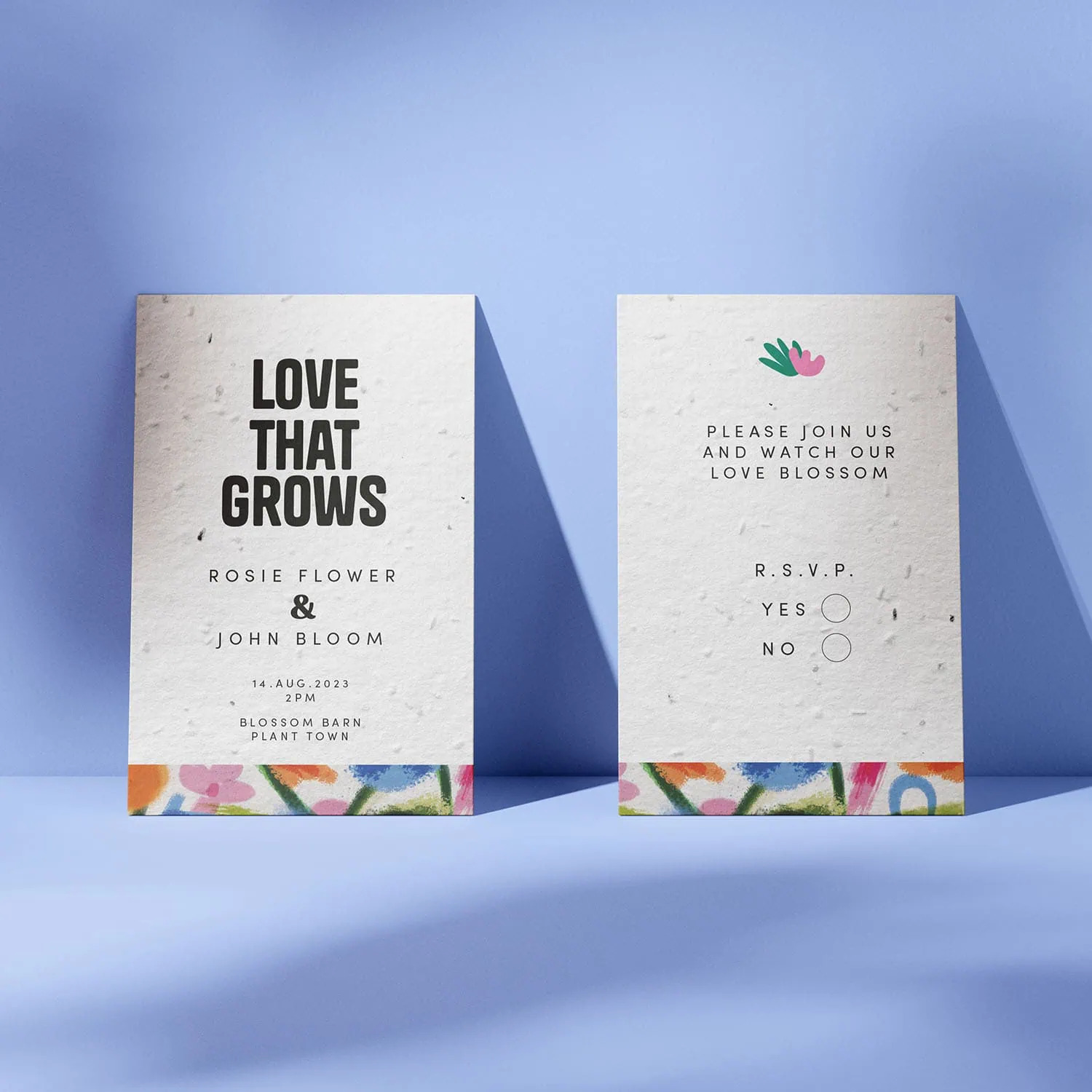
Plenty of wedding suppliers find their way into the industry through floristry, photography or cake. Tom Willday arrived by way of a print works in Leicester, a spell as an engineer at a Nottingham power station, and a quiet moment in his grandfather’s garden. He is the founder of SeedPrint, a Leicester-based printer and maker of plantable, fully recycled seed paper for stationery and cards, and the fourth generation to take up the mantle of a family printing business that has been running for the best part of 80 years.
That heritage shapes how he works. Willday grew up around the family printworks, helping out from a young age before training as an engineer and spending several years at a power station. When he returned to the family trade he did not start at the top; he learned each machine on the floor in turn, earning the team’s respect before eventually taking the business on. “We’ve always been about creating something meaningful on paper,” he says. “Now we’re creating something that continues to live after the paper has served its purpose.”
An idea that took root at a family gathering
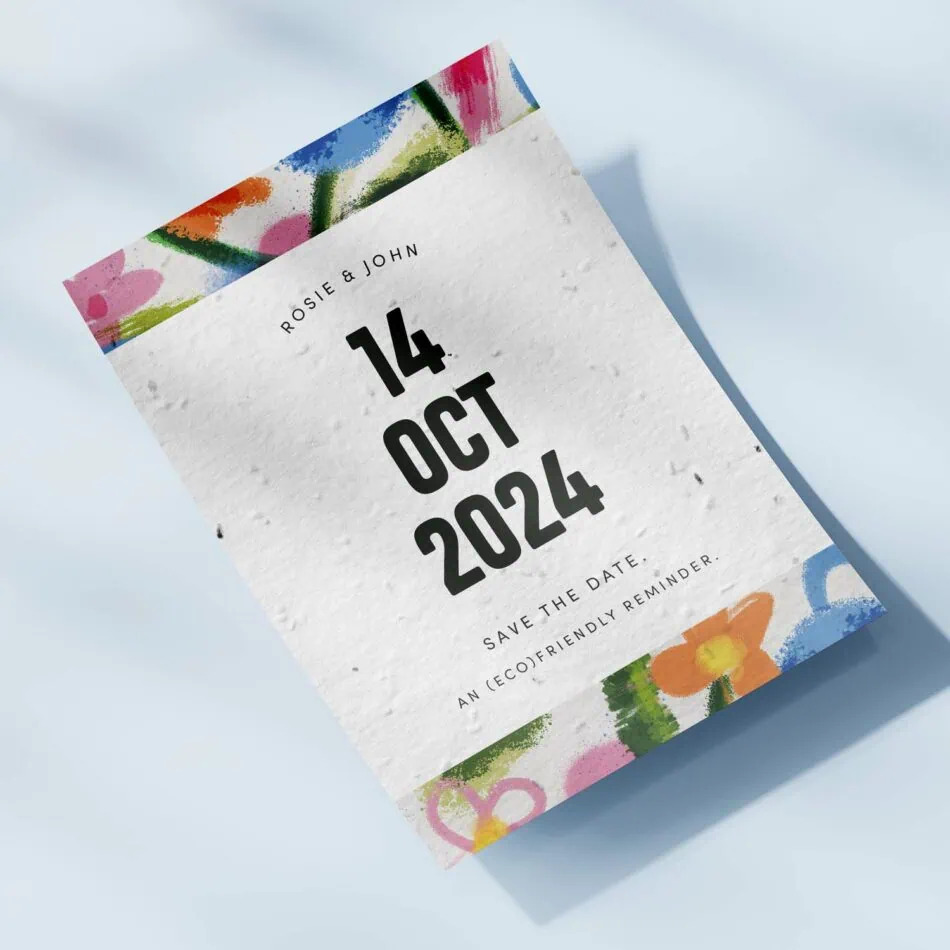
The turning point came a few years ago at a family get-together. Willday had already seen seed paper used for the odd business card or greetings card, but standing in the garden, he wondered why no one had made a book you could plant. That thought grew into a plantable children’s book under a sister brand, which went on to win backing on Dragons’ Den, and into SeedPrint, the stationery and card side of the family’s plantable paper work. His engineering background turned out to be the secret ingredient: working out how to print on seed-embedded paper without killing the seeds took months of trial and error on the presses.
How paper becomes a wildflower meadow
The product itself is disarmingly simple. Fully recycled paper is broken down into a pulp, UK native wildflower seeds are folded in, and the mixture is formed into sheets that run thick and tactile, usually between 300 and 350gsm. SeedPrint leaves the paper uncoated so it keeps its rustic, handmade feel, and prints with vegetable oil-based inks using a method that avoids the heat and heavy compression that would otherwise damage the seeds. Stored somewhere cool and dry, those seeds stay viable for up to two years. When the paper has done its job it is planted in soil, where it biodegrades and the seeds germinate into wildflowers, with spring the best time to plant.
Why it strikes a chord with couples
For weddings, that second life is the whole appeal. Save-the-dates, invitations, orders of service, menus, place cards and favours can all be made from seed paper, which means the stationery guests might otherwise bin becomes something they take home and grow. A table plan can spend its retirement as a patch of poppies, daisies and forget-me-nots. The wildflowers it grows also feed bees and other pollinators that have been under long-term pressure in the UK, so the keepsake does a small amount of good in the garden too.
“Our aim is to show that being sustainable isn’t just about talking, it’s about doing,” Willday says. It is a neat summary of why plantable stationery has found an audience among couples who want their choices to mean something rather than simply photograph well.
Sustainability that holds up to scrutiny
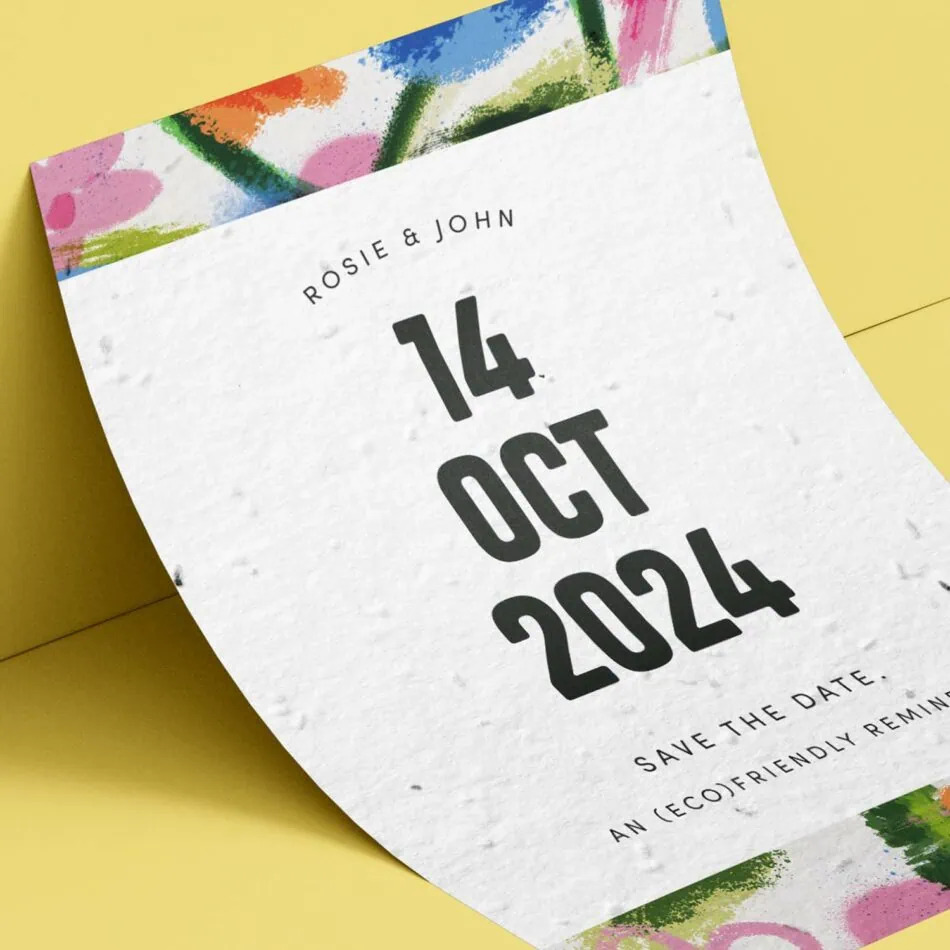
Behind the romance is a fairly rigorous setup. The paper is FSC-approved and non-GMO, the family firm is a member of the Woodland Trust and a carbon capture scheme, and the Leicester factory runs on alternative energy. Offcuts are recycled or donated rather than dumped, and because everything is sourced, made and printed in the UK, the carbon cost of shipping stays low. None of it is the kind of claim that falls apart when a couple asks a follow-up question, which is increasingly the point.
The lesson in the long game
Ask Willday what he would tell other makers and the answer is less about seed paper than about patience. The family business has lasted four generations by adapting without cutting corners, and SeedPrint is the same instinct applied to a new problem: take something the world treats as disposable and give it a reason to last. “People are tired of empty promises about being green,” he has said. “This is the chance to actually do something.” For couples planning a day they want to remember, and for a printer who has spent his life making things on paper, a wedding invitation that ends up as a flowerbed is about as fitting a legacy as it gets.


0 Comments