Don’t usually wear rings? How to find an engagement ring that feels like you
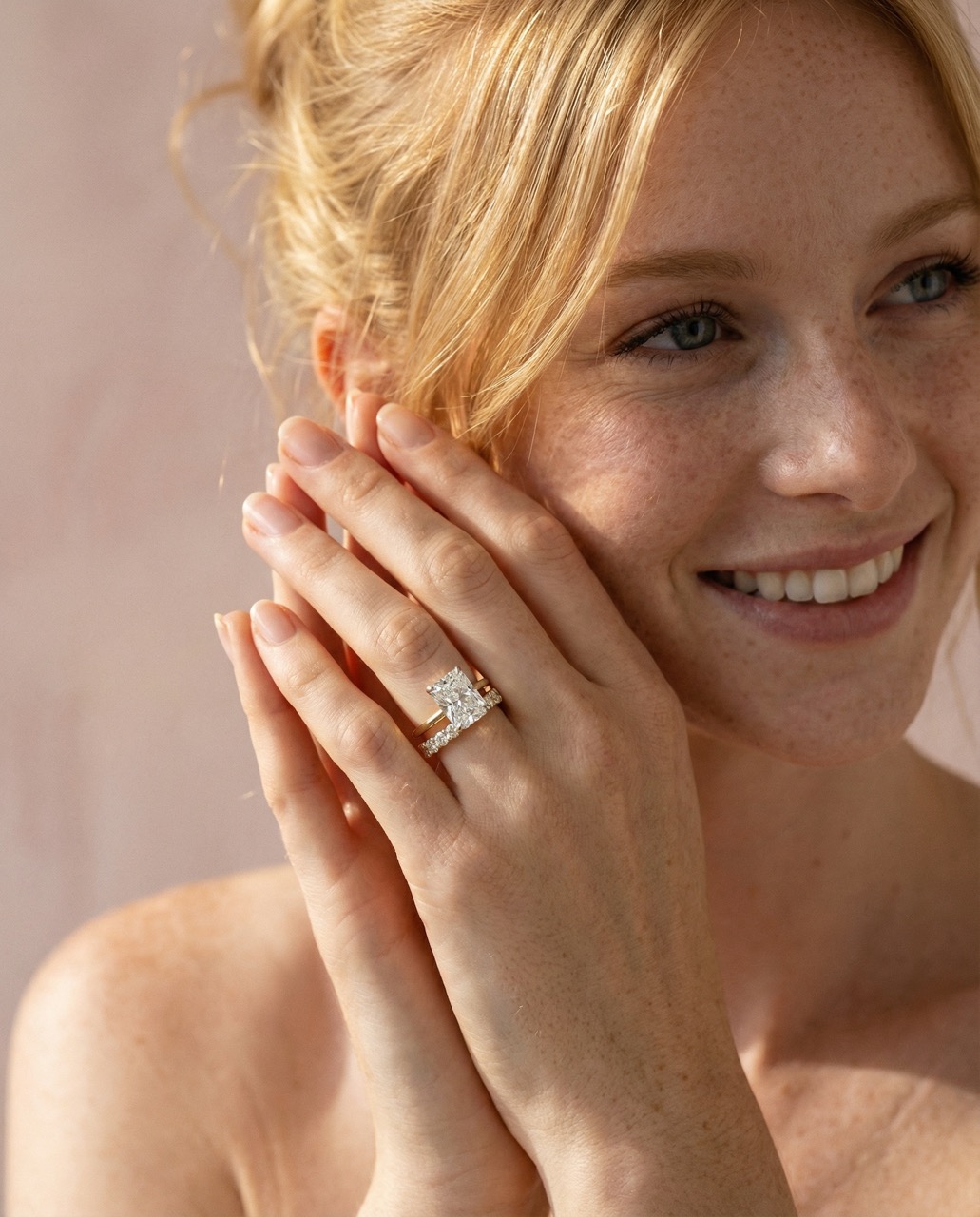
The first time you try an engagement ring, you might notice the band between your fingers before you really look at the stone. That can be a surprise when you’ve spent weeks looking at photographs. On somebody else’s hand it looked lovely. On yours, there’s suddenly something to get used to.
I’m John, Marketing Executive at Lily Arkwright. People often come to us with an idea of what they want, and our team helps them finalise that decision. If you don’t usually wear rings, I think it’s worth spending some of that first visit simply finding out what feels comfortable. You can be interested in a ring without being ready to order it.
Try a few quite different rings
A plain band is a good place to begin. Leave it on for a moment, then compare it with a solitaire where the stone sits above your finger. You’ll have something to compare beyond which photograph you liked best.
Among our single-stone ring designs, Grace has a round lab-grown diamond, four claws and an 18ct yellow-gold band. The plain shoulders make it easier to see the band and the centre setting separately. It’s a simple-looking ring, but turn it sideways and there is still a whole profile to consider.
Try something more decorative too, especially if you keep glancing back at it. An almost empty jewellery box does not oblige you to choose the quietest design in the shop.
“It feels odd” is worth saying
You don’t need to know the name of the part that bothers you. “It rubs here” or “I like it, but it feels too high” gives the jeweller somewhere to start. There’s no benefit in quietly putting up with a sample because you like the look of it.
Say you like the round stone and yellow gold, but the band feels wide. I’d keep those two decisions and ask to compare a narrower band. Changing everything at once makes it harder to work out what helped.
A sample that moves around can be distracting too. Before deciding that the design is wrong, ask whether the fit is affecting your impression. The sample may show you a shape and colour you love while telling you rather less about how the finished ring will feel.
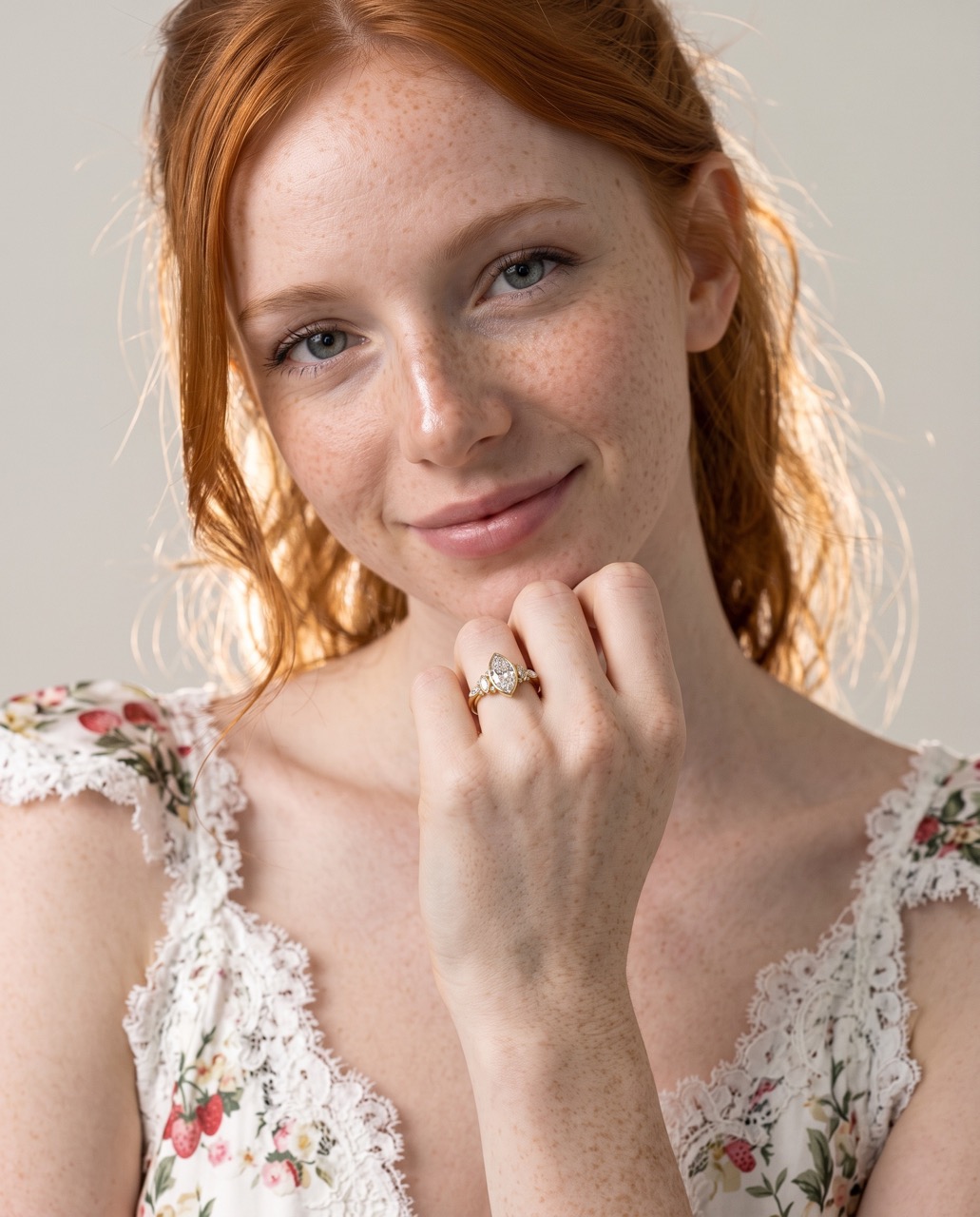
Have your finger measured professionally. GIA’s ring-sizing guidance explains that the ring should pass over the knuckle, feel comfortable in place and resist slipping off accidentally. Band width and changes in finger size through the day matter. If it pinches, feels tight or seems insecure, tell the jeweller.
Let your hand stop posing
This is the bit I’d make time for. Put your phone down after taking the photograph and let your hand rest. Then pick it up again, or hold your bag as you normally would. See what you notice when you stop concentrating on the ring.
Look from the side as well. GIA’s guide to ring settings discusses how claws can catch on fabric, so mention the gloves or close-fitting sleeves you wear regularly. The jeweller can assess the particular setting and help you compare alternatives.
A lower setting is worth trying if the height bothers you. A bezel has a metal rim around the stone, but that alone won’t tell you how high the finished ring sits. A flush-set stone sits within the band, which usually needs to be wider and thicker to accommodate it. You may prefer one profile and dislike the extra width of another. That’s something to discover on your own hand.
Try the wedding band while you’re there
If you hope to wear both rings on the same finger, ask to try a wedding band beside the engagement ring. You can leave the wedding-ring decision for later, but I’d want to know how the two feel together before settling on the first one.
GIA notes that the combined width of a bridal set needs consideration when assessing fit. Ask the jeweller to check where the rings meet, including beneath the centre setting. Two rings can feel quite different from either one alone.
Then take the engagement ring off and look at the band by itself. This matters if it’s the ring you expect to wear for work. It’s easy to spend the whole appointment checking how neatly a pair fits together and forget to ask whether you like both pieces.
Work out when you’ll wear it
Some people will want theirs on as often as possible; others will look forward to putting it on for dinner or a weekend away. Tell the jeweller which sounds more like you. There’s little point choosing around an imaginary version of your life where you suddenly enjoy wearing jewellery all the time.
If you’ll take it off regularly, decide where it will go. A protective case kept somewhere secure saves you having to find a safe spot when you’re already in a hurry.
Make a note of the sample you liked and anything still bothering you before you leave. The questions to ask before paying will help with the specification and practical arrangements, including what happens if an adjustment is needed.
I’d rather you went home knowing you like yellow gold but want to try a lower setting than felt you had to choose because everyone else was excited. You’ll be the one wearing it. Give yourself time to find out what you like.



0 Comments