Is It Safe to Buy an Engagement Ring Online? The Questions to Ask Before You Pay
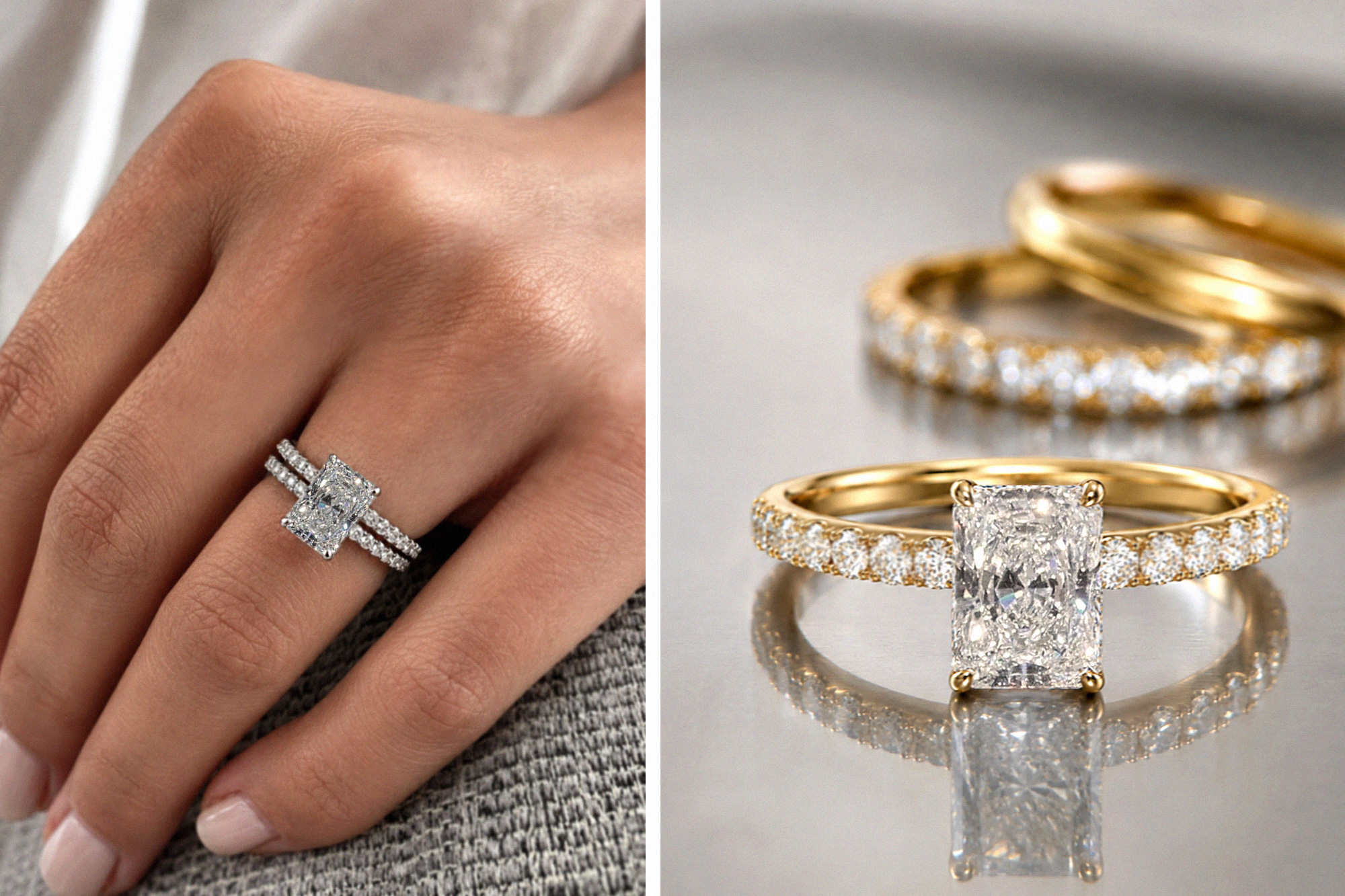
Buying an engagement ring online can feel uncomfortable. That is completely understandable. You are choosing something expensive and personal, often without holding the ring or meeting the jeweller face to face. Bespoke jewellery expert Lena Cohen shares all the advice you’ll need to help you make safe decisions and buy a ring you will love.
A familiar high street name may seem safer because you recognise it. But the size of a jewellery company does not tell you who will actually make the ring, how well they understand your request or what will happen if something changes halfway through.
“An online engagement ring purchase feels safe when every important promise is specific. You know who the jeweller is, what will be made, what you will approve, which documents you will receive and what happens if something changes.”
Lena Cohen, founder and jewellery designer
These are the questions I would ask before paying for an engagement ring online, whether it is an existing design, a made to order ring or a completely bespoke commission.
“The website looks professional. Is that enough?”
No. A polished website helps, but it proves very little on its own.
You should be able to identify the business behind it. There should be a real trading name, working contact details, a clear location, independent reviews and written information about delivery, returns, materials and production times.
Look at the photographs too. Do they appear to show one jeweller’s work, or do they look like a random collection of images from different sources?
Contact the business before ordering. You are not testing how quickly someone can send a cheerful sales reply. You are checking whether they answer the question you actually asked.
Here is a small test that is surprisingly useful. Call two or three times before placing the order, particularly if you have already exchanged emails or had a consultation.
Notice whether the same people answer. Do they recognise your name? Do they remember the ring you discussed, or at least know where to find the information quickly?
If every call reaches somebody new who has to search for notes, ask another department and work out who you are, your enquiry may be moving through several hands.
That is not automatically a bad sign. Large companies often work that way. But it does show you how personal the service is likely to be and whether the person speaking to you is actually close to the order.
To be honest, I would pay attention to this. A very polished first email is easy. Remembering what matters to you three conversations later is more meaningful.

“What should be agreed before I pay a deposit?”
You should receive a written description of the ring.
It should state:
- the metal and fineness, such as solid 18ct gold or platinum
- the ring size
- the stones
- the setting
- the agreed design
- the expected production time
- the total price
For a diamond ring, it should also be clear whether the centre stone is natural or laboratory grown and which details of the stone have been agreed.
Ask whether the price includes VAT, insured delivery, hallmarking, sizing and design work. Ask when the remaining balance is due and what could cause the final price to change.
This sounds obvious, but quotations can be surprisingly vague.
If the paperwork simply says “gold diamond ring”, that is not enough. You and the jeweller may be imagining two quite different things.
“I don’t understand diamond grading. How do I know what to choose?”
You do not need to become a gemmologist to buy an engagement ring.
You need a jeweller who can explain why a particular diamond suits your priorities without making you feel silly for asking basic questions.
You might say:
“I care more about how the diamond looks than having the highest clarity grade.”
“I want an oval diamond, but I do not want a very obvious dark bow tie.”
“These two stones are both within my budget. What difference would I actually notice?”
“I have small hands and do not want the ring to look out of proportion.”
Those are normal questions. In fact, they are often more useful than asking for a particular grade without knowing whether you would see the difference.
A jeweller should be able to discuss appearance, proportions, durability and price in ordinary language. They should not just recite the four Cs at you or keep pushing you towards the largest stone available.
Where possible, ask to see clear photographs or even a video of the actual centre diamond. Two stones with similar details on paper may look quite different.
For a significant natural diamond, ask whether it has an independent grading report and how that report can be checked. It may record the diamond’s weight, colour, clarity, cut information, proportions and identifying features.
But a grading report only describes the stone.
It does not tell you whether the ring is well made, whether the setting is practical or whether the finished piece will suit your hand. People sometimes expect the certificate to answer more than it actually does.

“Does a hallmark prove that the diamond is genuine?”
No.
A UK hallmark relates to the precious metal. It confirms that the gold or platinum has been independently tested and meets the stated standard of fineness.
It does not grade or certify the diamond.
When buying a gold or platinum engagement ring, ask whether the finished ring will be UK hallmarked and what marks you should expect to see inside the band.
Diamond documentation and metal hallmarking are separate things. They are mixed up all the time, so it is worth asking rather than assuming.
“Will I see the ring before it’s made?”
You cannot normally see the finished physical ring before it exists, obviously, but you should understand what you are approving.
For an existing design, the product photographs, written specification, chosen metal, stone and ring size may be enough.
For a modified or bespoke design, you may receive sketches, annotated images, computer generated designs, stone photographs, videos or a written explanation of the changes.
Not every bespoke ring follows exactly the same process. Some designs need detailed CAD images. Others are easier to approve through a clear reference design and written alterations.
CAD can be useful, but it is not proof that the jeweller has understood you.
Ask what you will see before production begins. Ask how many changes are included and when the design becomes final.
Also ask what could change the price.
It is a much easier conversation before production begins than after the ring is already being made.

“I don’t know exactly what ring I want. Is that a problem?”
No. Most people do not arrive with a complete technical design.
You might have one photograph, three completely different reference images, a preferred diamond shape, a metal colour, a budget or simply a strong idea of what you do not want.
That is enough to begin the process of creating a bespoke and unique ring.
The jeweller should help turn those preferences into decisions about proportion, setting height, comfort and everyday wear.
Tell them how you live as well.
A high setting can look beautiful in a photograph but be irritating for someone who wears gloves, works with their hands or catches jewellery on clothing.
These details may sound less exciting than choosing the diamond, but you will notice them every day.

“What if the proposal is meant to be a surprise?”
The proposal can still be a surprise even if the ring is not chosen completely in secret.
Some couples choose the design together. Others discuss only the diamond shape, metal colour or general style. Some select the ring together and keep the timing of the proposal private.
There is no correct way to do it.
If you are unsure of the ring size, ask whether the design can be resized, how much adjustment is possible and how long resizing usually takes.
Some rings are much easier to resize than others. Full eternity bands and designs with detailing all the way around the band can be difficult to alter.
It is also worth asking how the engagement ring will sit with a future wedding band.
A straight wedding ring will not sit closely beside every engagement ring. Sometimes a shaped band is needed.
You do not need to choose the wedding ring now. It is just useful to know whether the engagement ring has been designed with one in mind.
“What happens if I change my mind?”
Read the terms before paying, not when something has already gone wrong.
A stocked ring, a ring made in your size, an altered design and a fully bespoke commission may all have different cancellation and return conditions.
Ask when work begins, whether the deposit is refundable and what happens after the design has been approved.
You should also know what happens if the ring arrives damaged, does not match the written specification or simply needs resizing.
Do not assume that an individually made ring can be returned under the same conditions as a standard product.
Ask. Get the answer in writing. Keep the email.
“What warning signs should make me stop?”
I would pause if the seller will not provide a proper written specification, describes the materials vaguely or avoids questions about hallmarking and diamond documentation.
I would also be careful if the price keeps changing without a clear explanation, if there is pressure to pay immediately or if the jeweller repeatedly tries to increase the stone size after you have already stated your budget.
Some companies design, make and communicate with clients directly. Others send the work through several suppliers. Neither arrangement is automatically wrong, but you should understand what kind of service you are paying for.
Promises made by phone should always be confirmed in writing.
“Is an independent jeweller riskier than a large chain?”
Not necessarily.
A large retailer may offer familiar branding, several branches and standard procedures.
An independent jeweller may offer more direct communication, greater flexibility and a clearer idea of who is responsible for the ring.
Neither model guarantees a good result. It really does come down to the people, the process and how clearly everything is agreed.
Before paying, you should know who you are buying from, exactly what is being made, which documents you will receive and what happens if the size, timing or design changes.
When those answers are clear and written down, buying an engagement ring online stops feeling like trusting an insta-photo. It becomes a process you can follow and understand.
About the author
 Lena Cohen is the founder and jewellery designer behind Lena Cohen Fine Jewellery, an independent London family jewellery business creating made to order and bespoke engagement rings in solid 18ct gold, platinum and natural diamonds. Bespoke commissions begin from £3,000. Remote consultations are available across the UK and internationally.

0 Comments