How a Personalised Embroidered Wedding Veil Is Made: From Story to Stitch
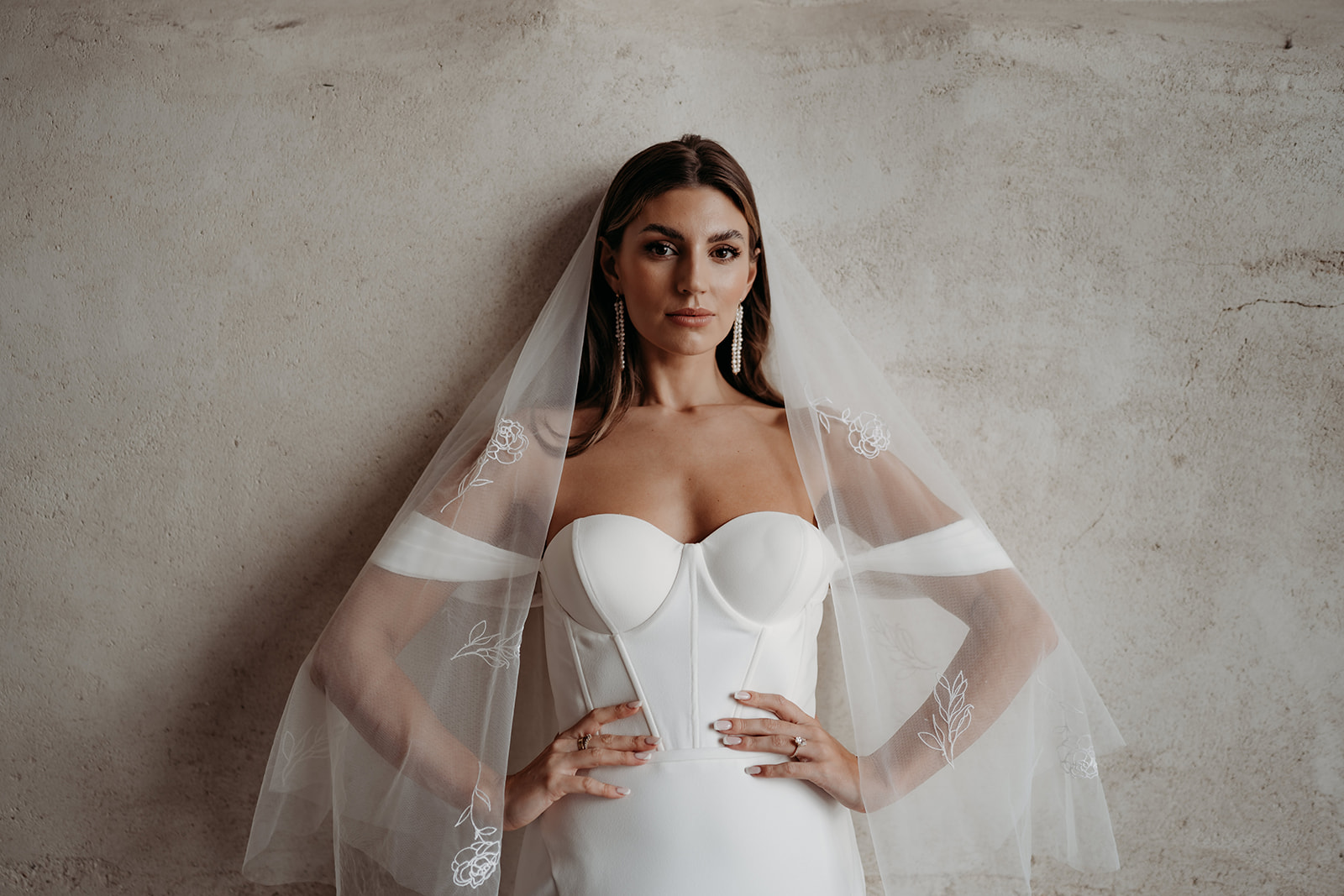
TL;DR: You don’t need to know exactly what your wedding veil should look like before working with a designer. A personalised embroidered wedding veil begins with understanding your dress, your style and the details that matter to you. From hand-drawn artwork translated digitally, stitch by stitch, to embroidery samples and full-scale paper templates, each stage turns those ideas into a considered design created specifically for you.
From the outside, creating a personalised embroidered wedding veil can look a little like magic.
A bride shares an idea, perhaps something deeply meaningful or simply a feeling she wants her veil to capture, and some time later that idea appears stitched into metres of tulle. At Rebecca Anne Designs, I create personalised embroidered wedding veils this way for brides across the UK and around the world.
But the part I love most happens in between.
Behind every finished veil is a process of listening, drawing, editing, measuring, sampling and making countless small design decisions. It is creative, but it is also incredibly precise.
Most importantly, it isn’t a process you need to know how to navigate before you arrive.
In fact, some of my favourite commissions have started with the words, “I don’t really know what I want, but…”
Photographer credit: UK & international editorial wedding photographer Kerry Ann Duffy
You don’t need a finished veil design to begin
There can be a misconception around bespoke design that you need to arrive with a fully formed vision.
You really don’t.
Many of my brides find me precisely because they haven’t seen the veil they want anywhere else. They might know how they want to feel, have photographs of their dress or have collected snippets of inspiration from their wedding, but there isn’t necessarily an existing veil they can point to and say, “I want that.”
That is often where the most interesting designs begin.
My first job as a veil designer isn’t to start drawing. It’s to listen.
I want to understand the dress and overall wedding style, but also what my bride is actually drawn to. Sometimes there’s a personal detail she already knows she wants to include. Sometimes the direction becomes clear simply through talking.
A bride doesn’t need to have the design worked out before coming to me. Helping her translate those ideas into a veil is part of what she’s working with a designer for.
Designer takeaway: You don’t need a finished idea to commission a bespoke wedding veil. You need a starting point, and a designer who knows how to develop it.
Photographer credit: Norfolk, UK and destination wedding photographer Emma Olivia
What makes a personalised embroidered wedding veil feel considered?
Once I understand the ideas behind a veil, the next stage is often editing rather than adding.
It is very easy to gather several things that feel meaningful and assume the most personal design will be the one that includes all of them. Often, the strongest design comes from knowing what not to include.
I think about hierarchy. What should somebody notice first? What might only reveal itself when they look more closely?
Personalisation might take the form of beautifully simple initials and a date, lines of poetry travelling around the edge of a veil, hand-drawn pattern work, a celestial composition or a completely original illustration. The embroidery itself can be minimal or incredibly detailed.
What matters is that every element feels like it belongs.
Sometimes one small detail sitting quietly at fingertip level says far more than filling an entire veil. At other times, the proportions of the dress and setting can carry a much bolder composition.
A personalised veil isn’t defined by how much embroidery it contains. It is defined by how intentionally the design has been created for the person wearing it.
Photographer credit: Cotswolds & UK editorial wedding photographer Eleanor Bryant
Your veil doesn’t need to be inspired by another veil
This is something I wish more brides knew.
Pinterest and Instagram can be wonderful for discovering your taste, but you do not need to find somebody else’s wedding veil to use as the blueprint for yours.
Inspiration can come from almost anywhere.
It might be architecture, a piece of fabric, artwork, stationery, the landscape around your wedding or simply the way you want the finished veil to feel. A personal reference might become a tiny hidden detail, while something completely unrelated to bridalwear might spark how the veil comes together.
One of my favourite examples is actually one of the veils I made for my own wedding.
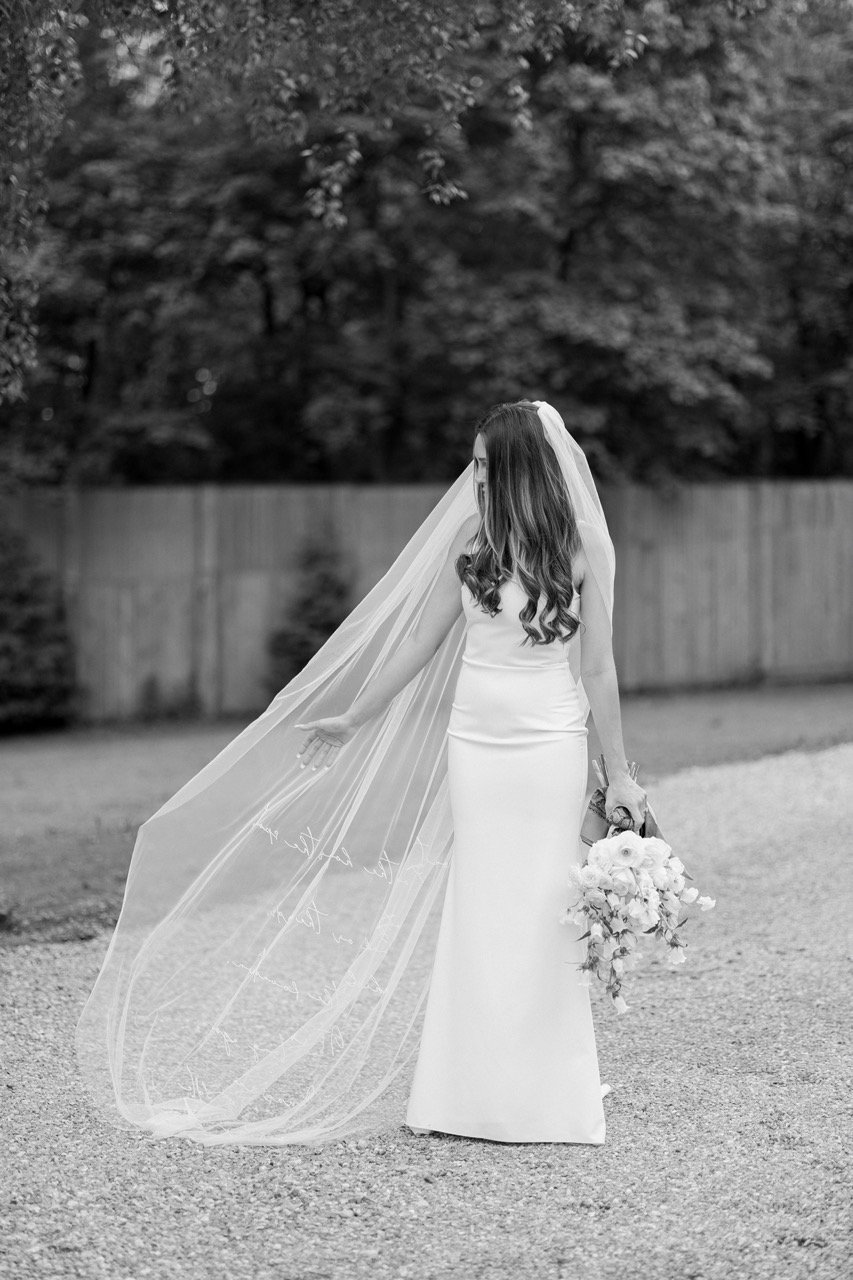
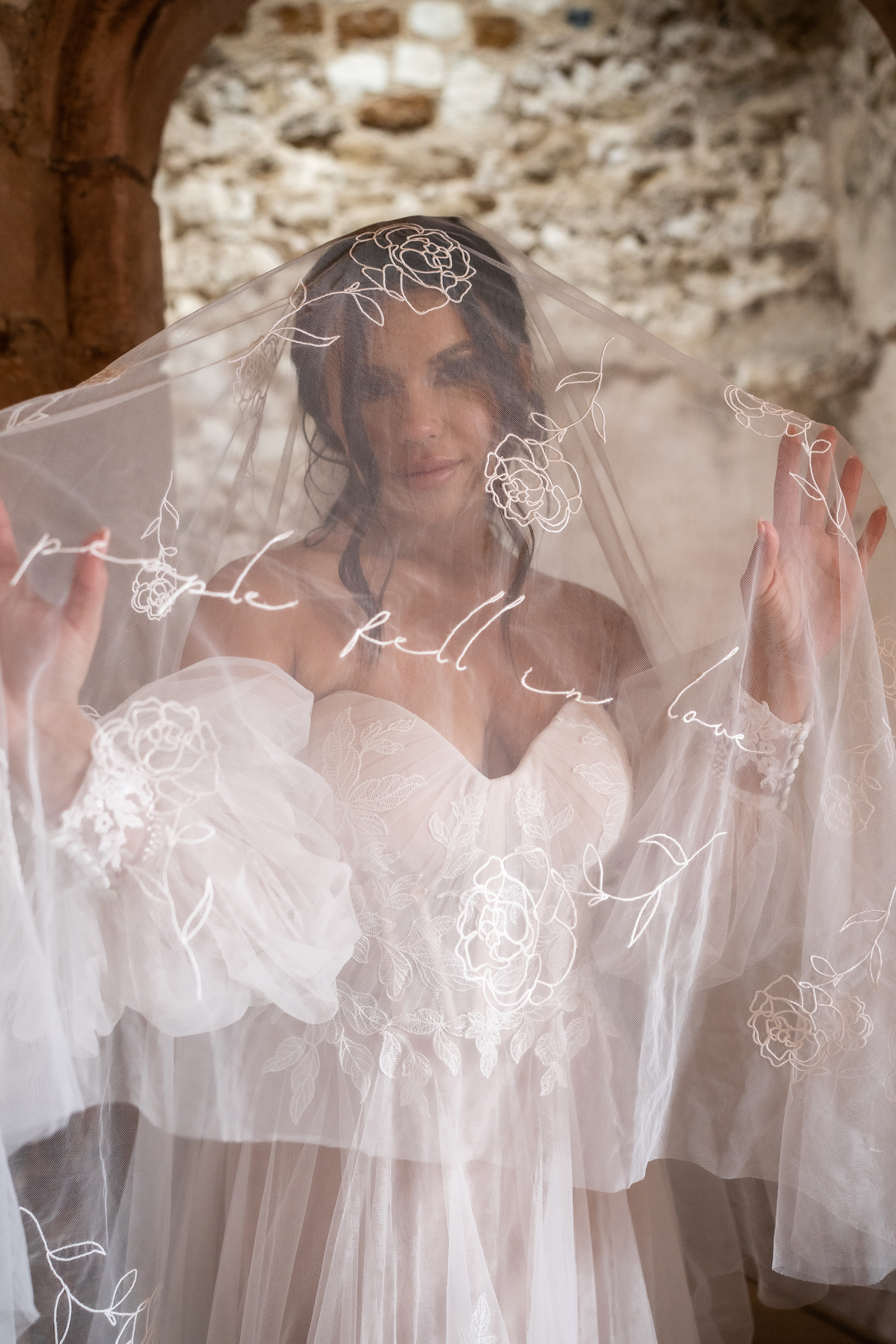
I had commissioned a bespoke poem for our ceremony with poet Jen Feroze. Rather than simply placing a line of poetry onto the tulle, I selected my favourite sections, developed a new embroidery font and stitched the words around the entire edge of a two-tier veil.
From a distance, the script became almost a pattern in itself.
The starting point wasn’t another veil. It was a piece of writing that meant something to us.
That is where bespoke design becomes exciting to me: taking an idea that may have nothing to do with a wedding veil and working out how it can belong beautifully on one.
A bespoke veil can begin with a memory, a feeling, artwork, words or another visual reference. It doesn’t need to begin with another veil.
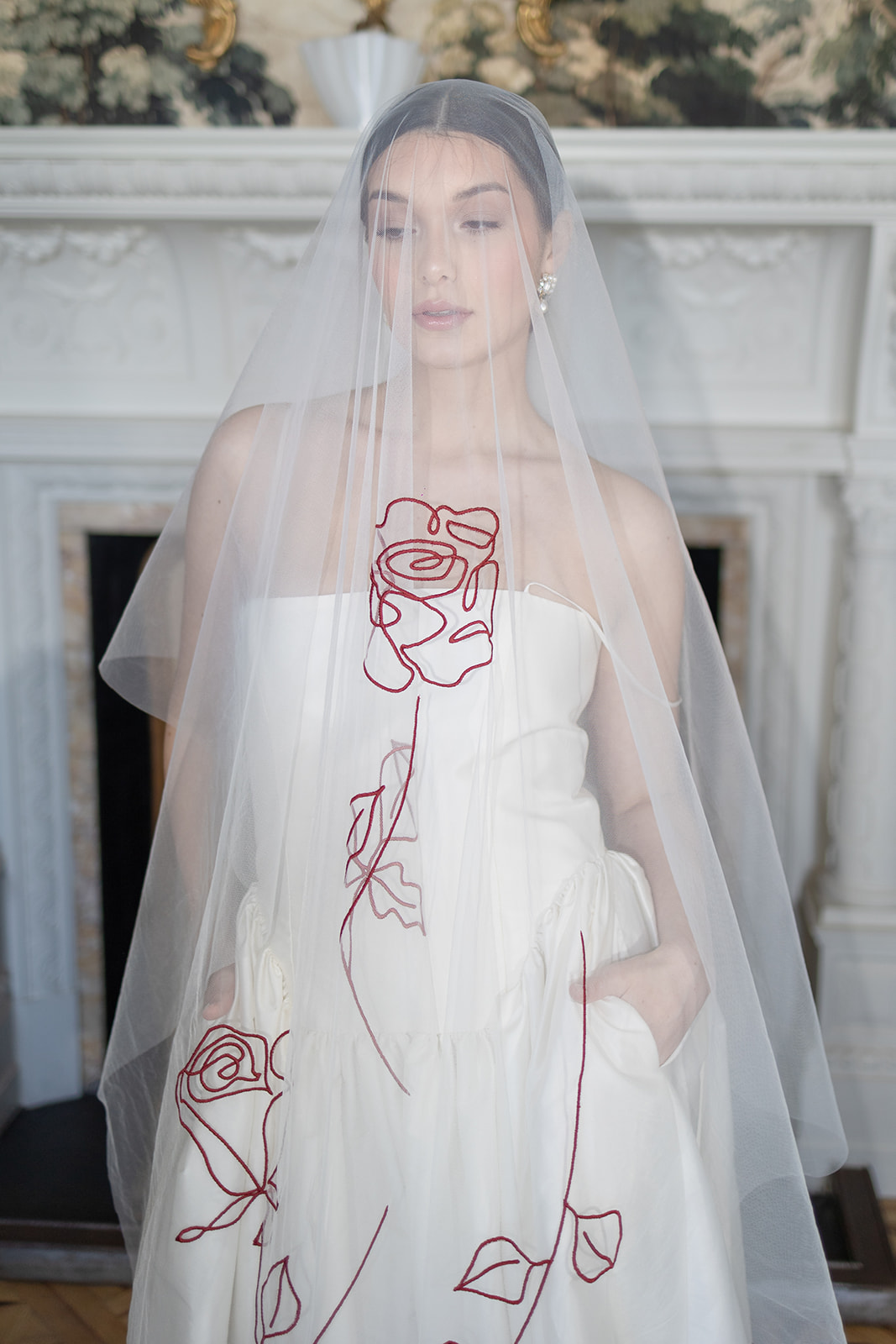
Photographer credit: English fine art wedding photographer Laura Jane
How I design embroidery for the dress and the way a veil moves
A design might look perfect on a screen and just not feel right once it is placed onto a veil.
Before embroidery is finalised, I am thinking about the veil itself: its length, width, volume and how the tulle will fall around the body.
The dress plays a huge part too.
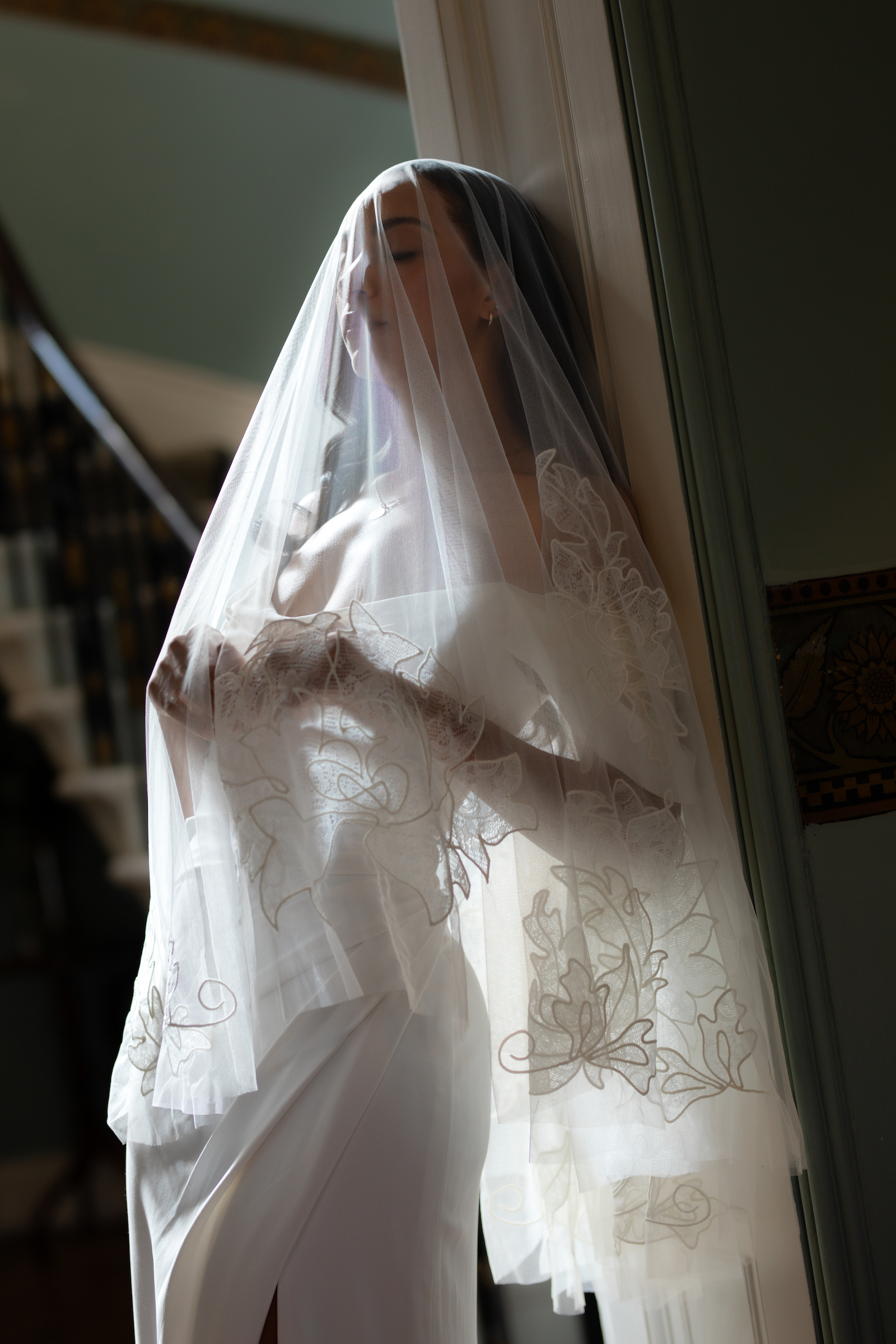
I look at its silhouette, train, fabric, back detail and embellishment. If a gown is already intricate, the veil may need areas of quiet. A beautifully minimal dress, on the other hand, can give a more expressive embroidered design space to become the focal point.
Placement changes everything.
Something positioned beautifully while the veil is lying flat might disappear when it falls into folds. Wording can be hidden against the dress. A tiny piece of embroidery can become almost invisible when viewed from a few metres away.
And this is where creativity and mathematics sit surprisingly happily alongside one another.
Scale, spacing, balance, stitch count and precise embroidery placement are all part of the process. There is rather more measuring involved in being a veil designer than people might imagine.
From a designer’s perspective: Good veil embroidery has to work in three dimensions. I am designing not only for how the veil looks laid flat, but for how it falls around the body, moves and interacts with the dress.
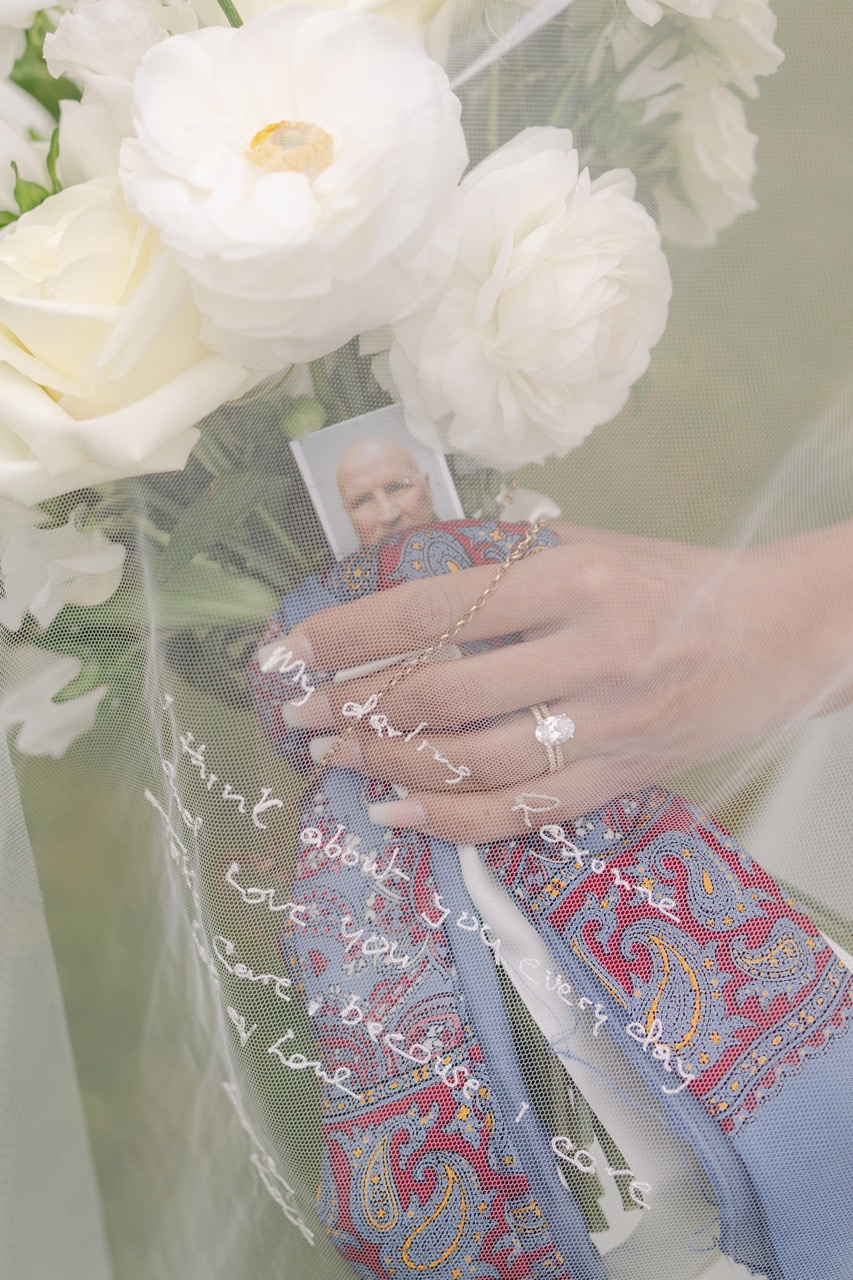
Photographer credit: Kerry Ann Duffy
From sketch to stitch: how veil embroidery is created
Once the composition has taken shape, I begin developing the artwork.
For illustrative designs, this often means drawing by hand before converting the artwork into embroidery. For other designs, I might be working with existing lettering or another source that needs to retain its individual character.
A lovely example was a veil I created for my bride Roxanne using writing taken from inside a card from her grandmother.
The aim wasn’t to make the words neater or turn them into a generic handwriting-style font. The beauty was in preserving the writing as it actually was.
That artwork then has to become stitches.
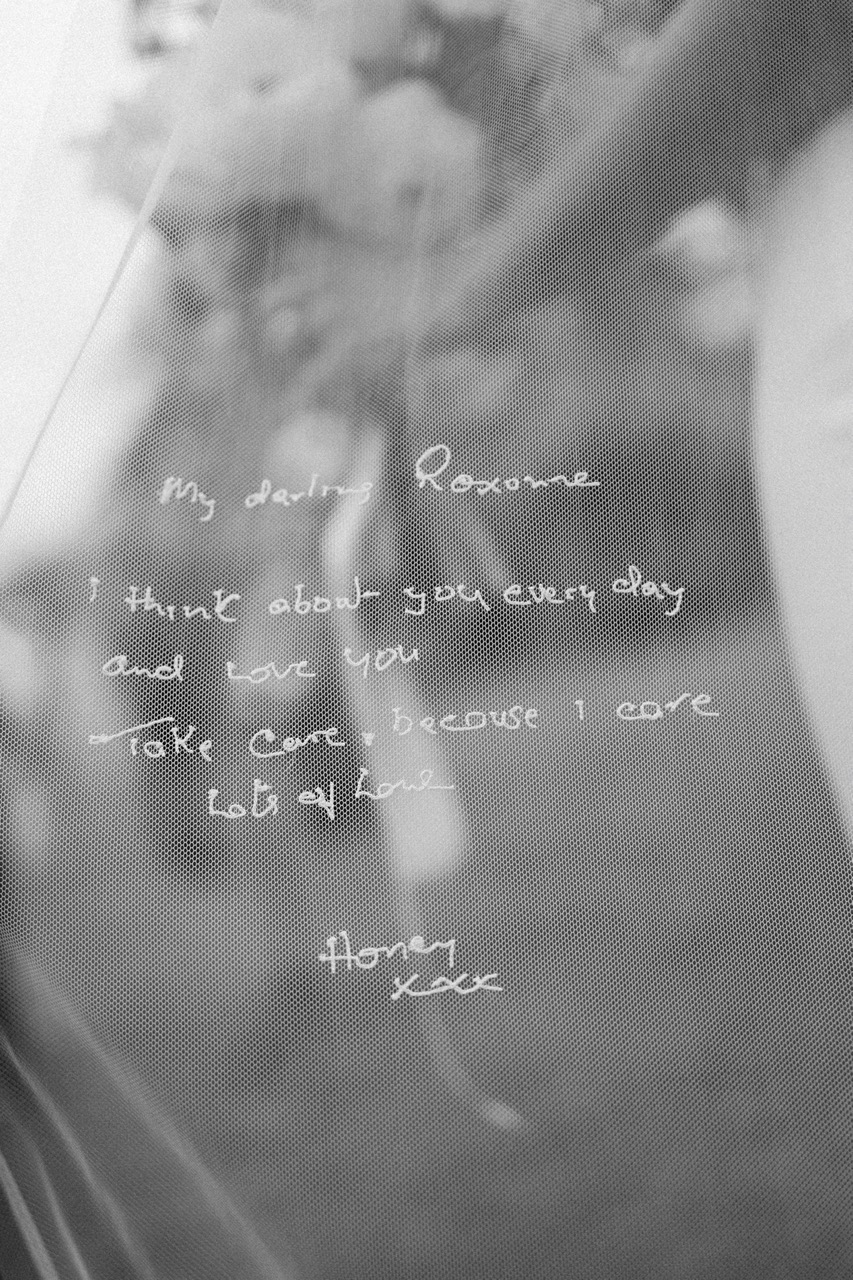
Photographer credit: Kerry Ann Duffy
Translating artwork digitally, stitch by stitch
Embroidery isn’t simply a case of uploading a drawing and asking a machine to reproduce it.
I translate the artwork digitally, stitch by stitch, making decisions about direction, density, scale and how each part of the design will be constructed in thread. Those choices can completely change how the finished embroidery looks and behaves.
The tulle itself is an equally important part of that process.
I have spent years sourcing the tulle I use for my veils and learning how it behaves under embroidery. Its lightness and fluidity are what give a veil its beautiful movement, but working successfully with something so delicate requires an understanding of how much structure each design needs and how the fabric will respond.
Fine details still need to read clearly in thread. Larger elements need to hold their shape without weighing down the tulle or compromising the softness and movement of the veil.
This technical stage is one of the less visible parts of my bespoke veil design process, but it can make an enormous difference to the finished piece.
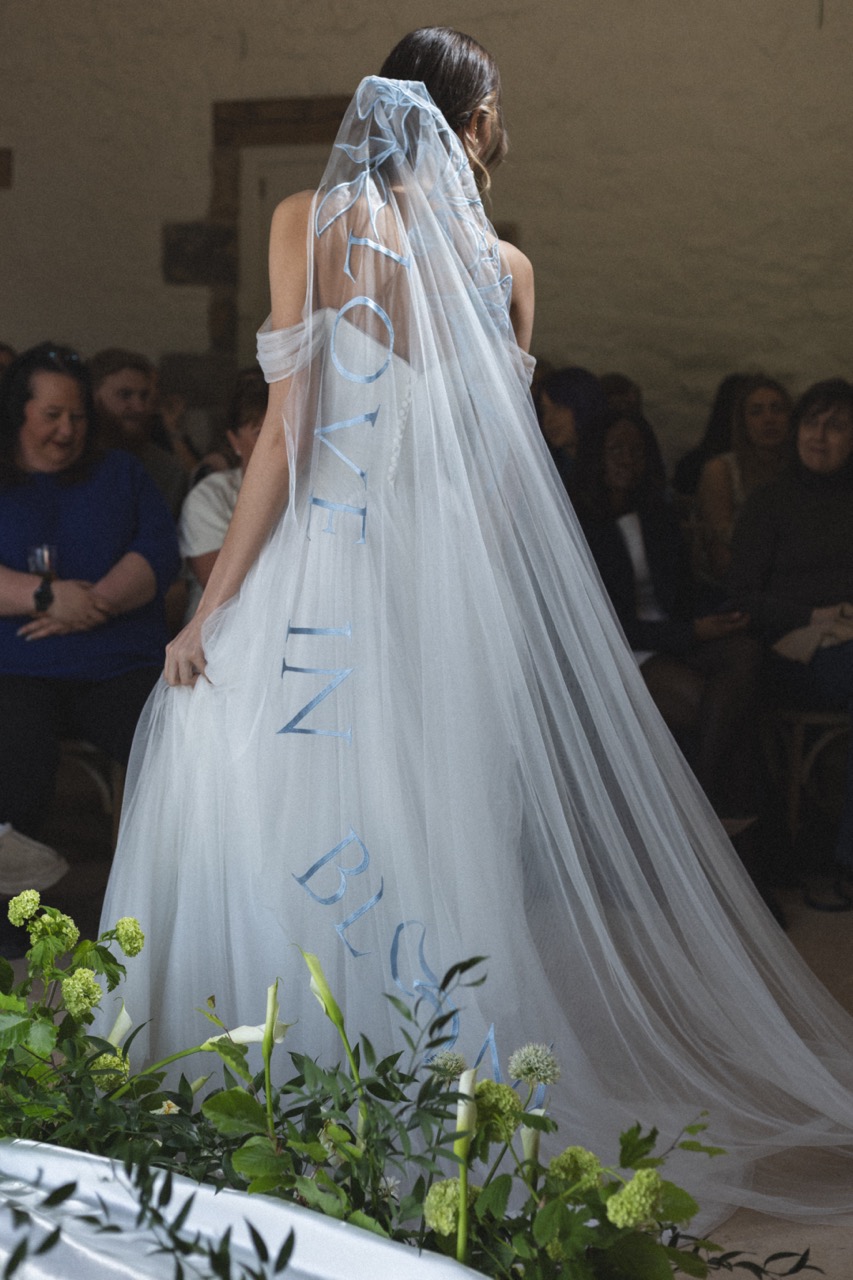
Photographer credit: North west wedding photographer Claire Basiuk
Sampling the embroidery before the final veil
Before stitching the final veil, I create a test stitch for every bride.
I send a small section of their actual embroidery so they can see and hold part of their veil before the finished piece is made. It is one thing to approve an illustration on screen, but thread has texture, weight and dimension.
The test stitch gives us an opportunity to check that the scale, finish and overall feel are right before moving on to the final veil.
The test stitch is the first physical glimpse of the finished veil, giving each bride the chance to see her embroidery in thread before the full design is stitched.
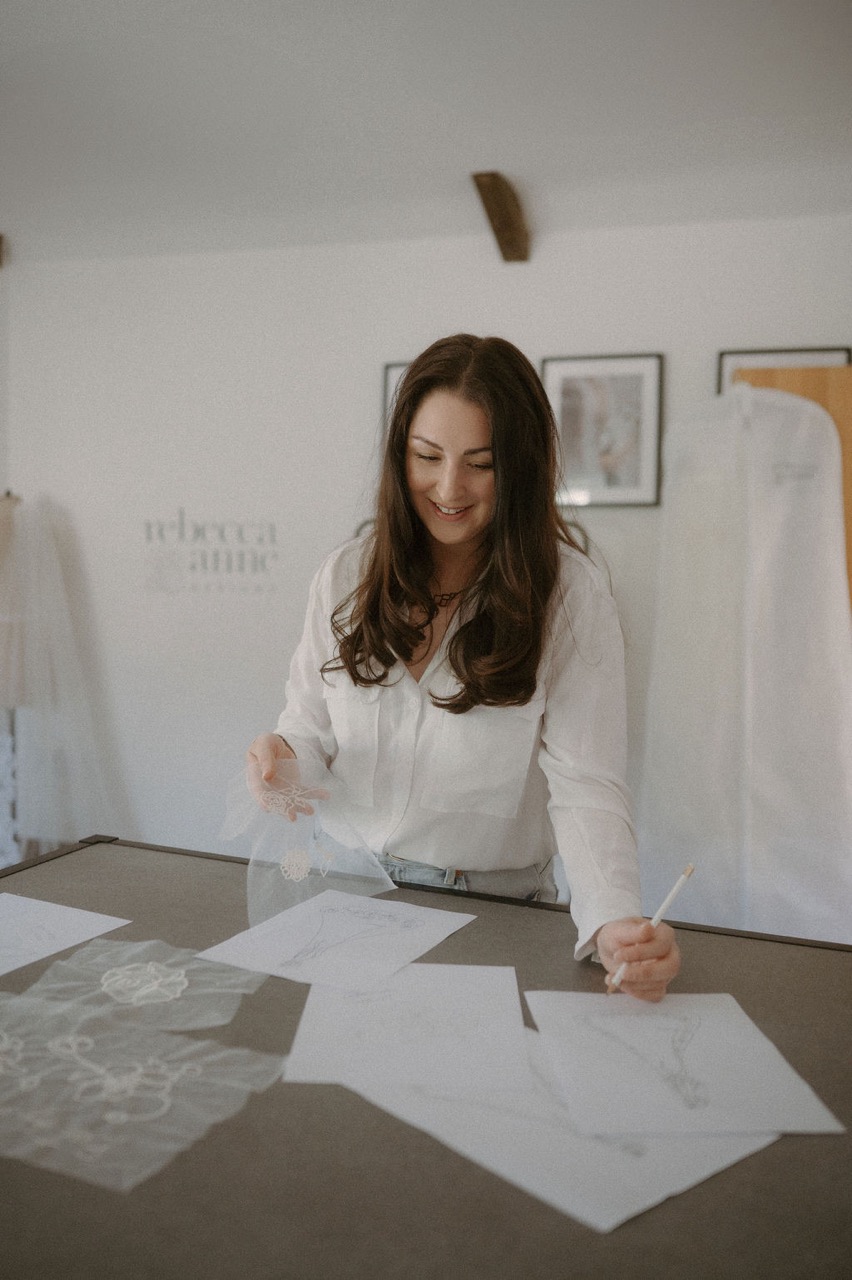
Photographer credit: editorial wedding photographer Danielle Veitch
How the paper template stage works
One of my favourite parts of the entire process happens before a single final stitch is embroidered onto the veil.
Once the tulle has been cut to its agreed dimensions, I print the embroidery artwork as paper templates and position them across the actual veil.
Then I photograph the full layout for my bride.
This is where an idea suddenly becomes real.
A drawing can tell you what an individual piece of artwork looks like. The paper templates show you the composition: how the elements relate to one another, how much negative space surrounds them and how the design works across the proportions of the finished veil.
We might discover that an element wants to sit slightly further towards the edge, that wording needs to move higher to be visible against the dress, or simply that an area needs more breathing room.
Nothing has been permanently stitched at this stage, so adjustments can still be made before committing to the embroidery.
It also means my bride remains part of the process. I am bringing my experience and designer’s eye to the composition, but it is still her veil.
The paper-template stage is a full-scale preview of the veil design, allowing the placement and overall composition to be refined before the embroidery becomes permanent.
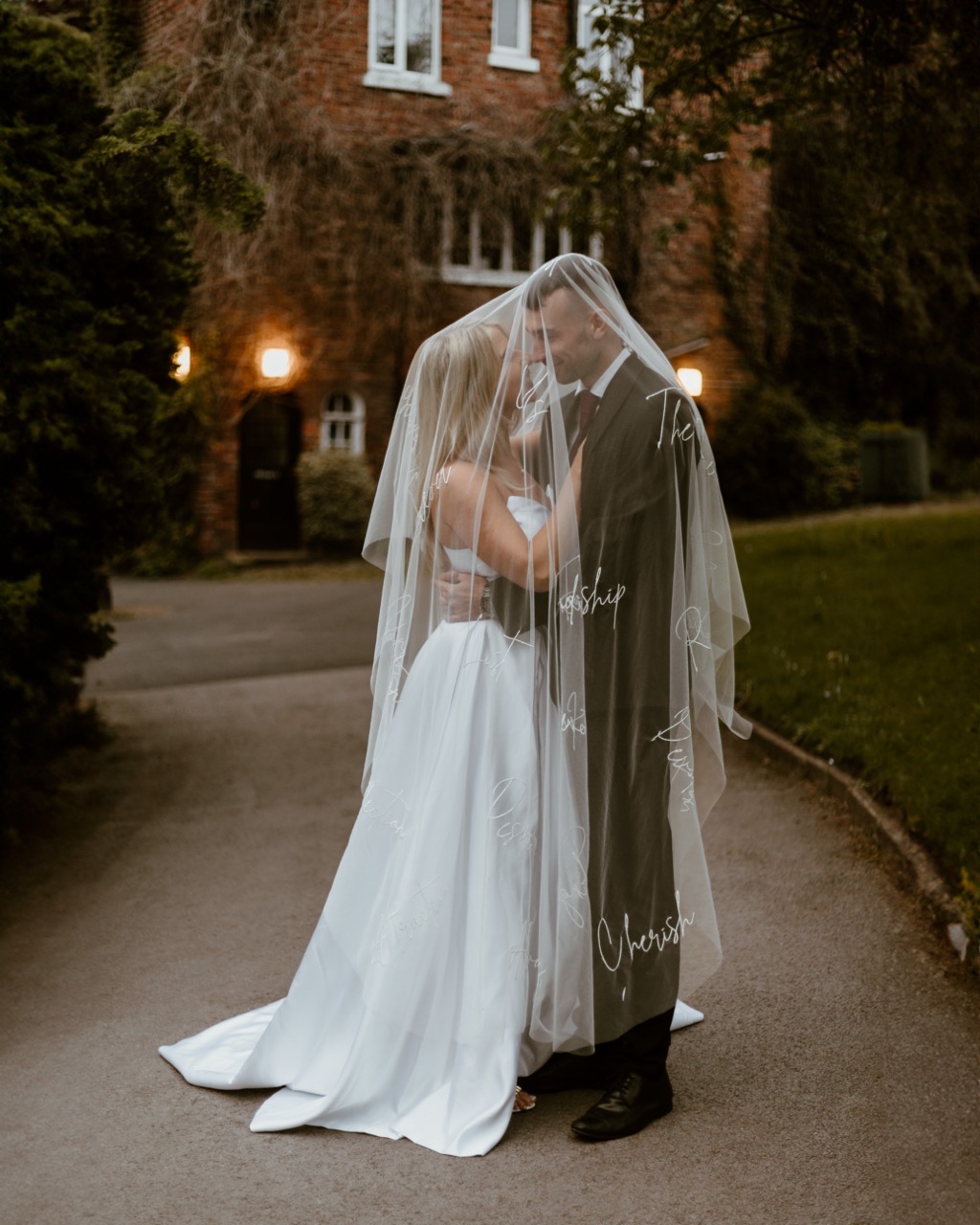
Photographer credit: UK and destination wedding photographer Soul Capture
Can a bespoke wedding veil be designed remotely?
Yes. In fact, my entire bespoke design process is created to work virtually.
I design veils for brides across the UK and internationally, and we work together through email and video calls rather than meeting in person.
We begin with photographs of the dress and a design consultation, then move through drawings, measurements, test stitches and the full-scale paper template stage together.
Each step gives my bride something tangible to respond to before the final embroidery is stitched. She can see the design developing, understand the decisions I am making and approve the composition as we go.
That means commissioning a bespoke veil remotely never feels like handing over an idea and simply hoping for the best.
Whether my bride is elsewhere in the UK or thousands of miles from my Devon studio, I want the experience to feel personal, collaborative and carefully guided from the first conversation to the finished veil.
A bespoke wedding veil can be designed entirely virtually when the process includes clear communication, visual references and clear stages where my bride can see and approve the design as it develops.
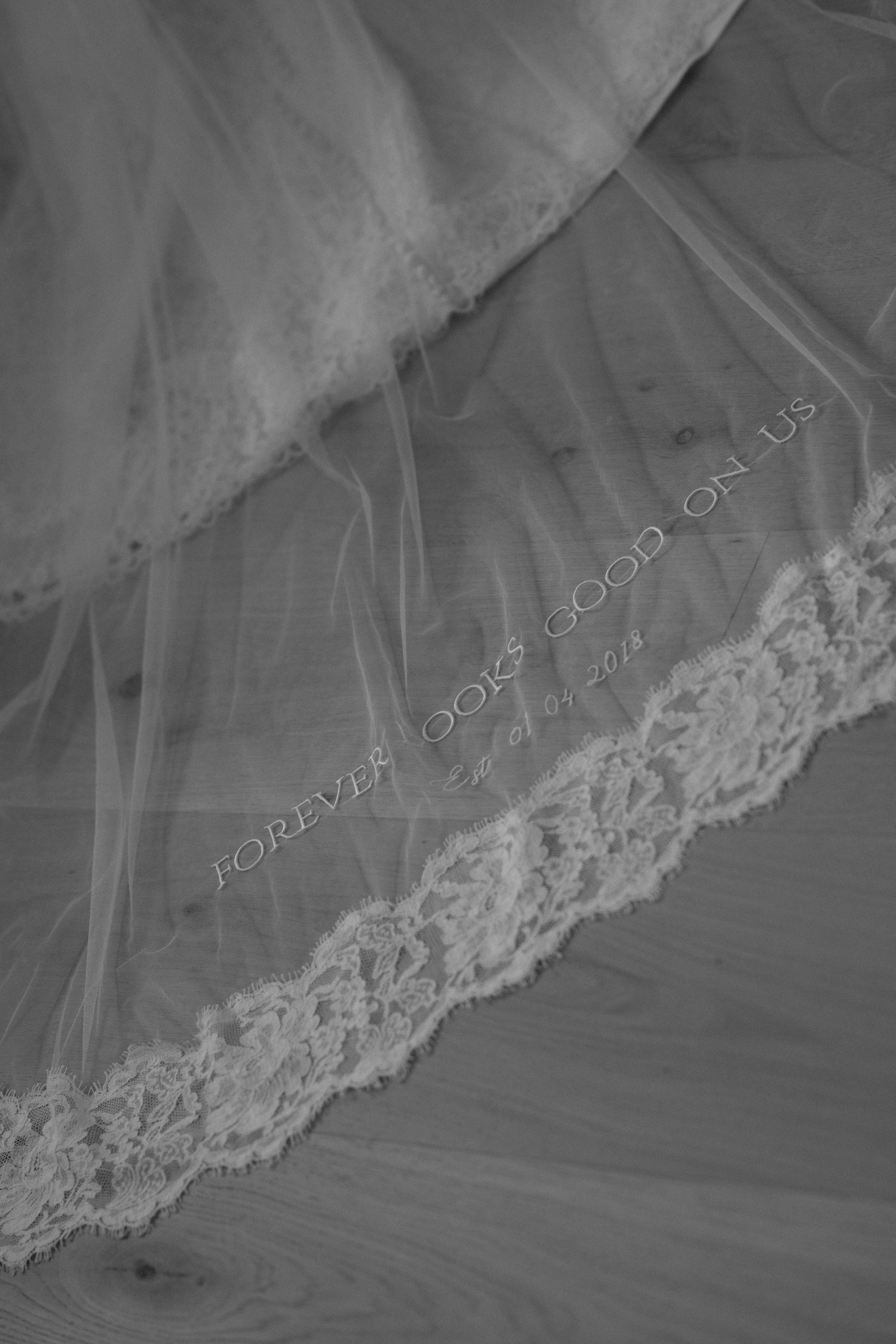
Photographer credit: Eleanor Bryant
What should you think about before designing an embroidered veil?
Most brides understandably begin by thinking about what they want their veil to look like.
Meanwhile, I’m asking a slightly different set of questions:
- Where will the design sit when the veil is actually in your hair?
- What embroidery will be visible against the dress, and what might disappear?
- Is the veil wide enough to balance the proportions of the train?
- Will a tiny detail still read beautifully from a distance?
- Should the design be symmetrical, or would something more organic suit the gown?
- Does an area need another element, or simply more space?
- How will the veil look in movement rather than laid perfectly flat?
Those are the decisions that turn a collection of ideas into a design that feels balanced and complete.
They are also why I never expect a bride to arrive knowing all the answers.
That’s my job.
My advice: Think about what you want your veil to mean and how you want it to feel. You don’t need to work out the composition, scale or embroidery placement yourself.
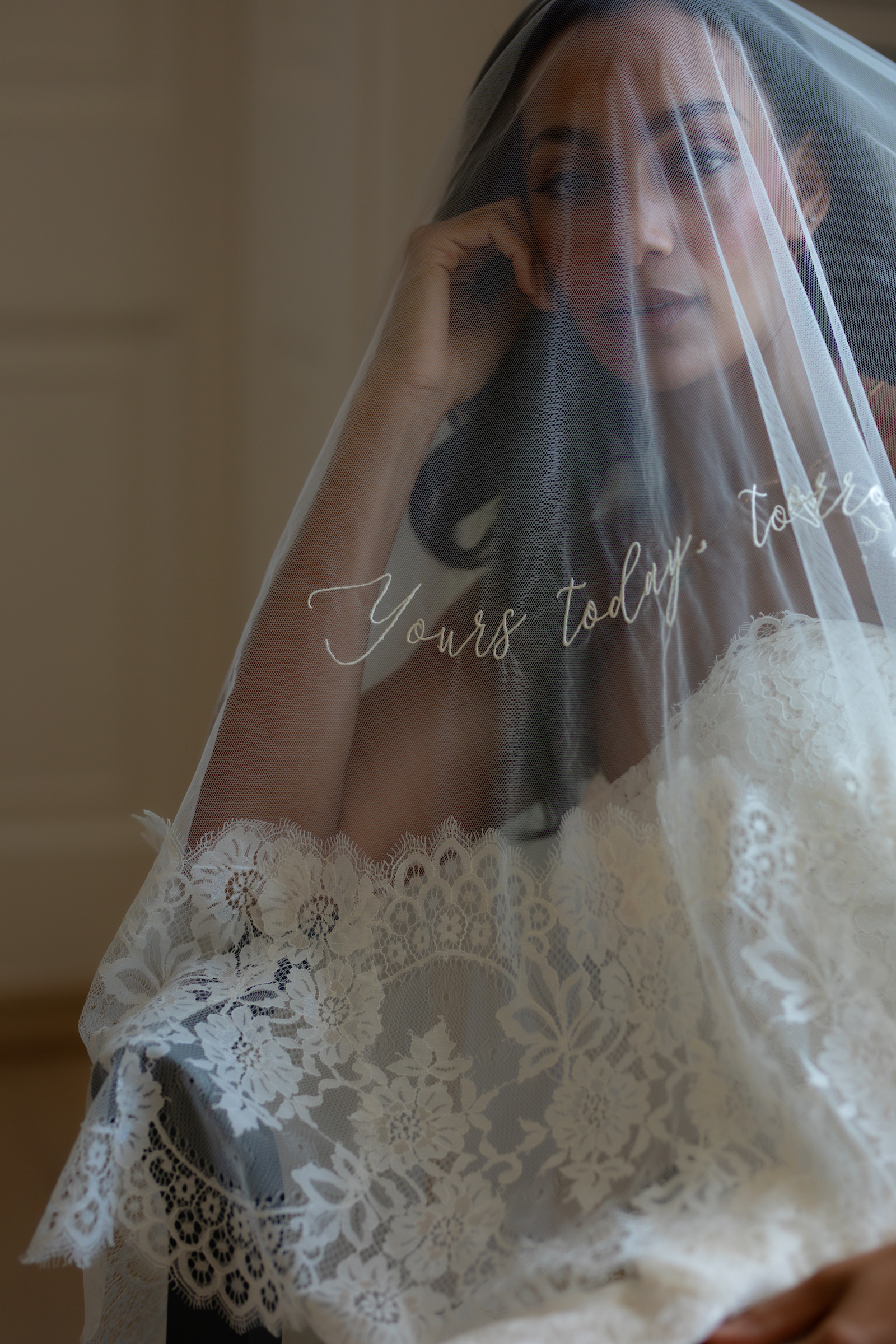
Photographer credit: Eleanor Bryant
From an idea to something you can wear
For me, the most exciting thing about a personalised embroidered veil is that it often begins with something intangible.
An idea. A memory. A visual reference. A sentence. A feeling about how you want to look when you walk into the room.
Then, slowly, it begins to take shape.
A conversation becomes a drawing. The drawing is translated digitally, stitch by stitch. The individual elements begin to come together across the veil. Eventually, there is a finished veil sitting on my studio table that didn’t exist anywhere in the world before we started.
After more than a decade designing veils, that transformation is still the part I find most special.
So if you’re thinking about creating a personalised wedding veil, don’t worry if you can’t yet picture exactly what it looks like.
You don’t need to arrive with the finished design.
You just need somewhere for the story to begin.
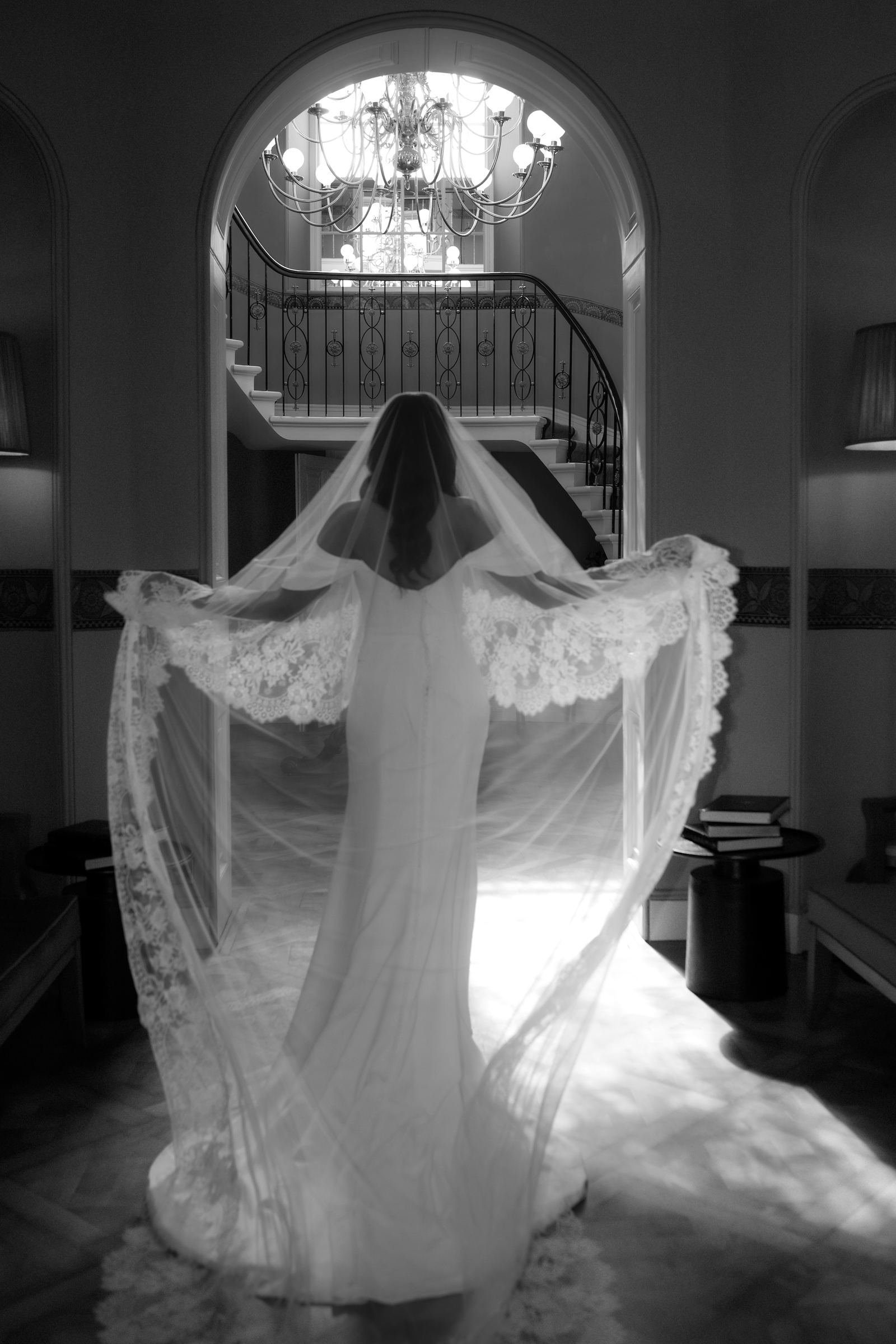
Eleanor Bryant‘s an editorial wedding photographer who captures timeless and romantic weddings in the Cotswolds, south west and around the UK.
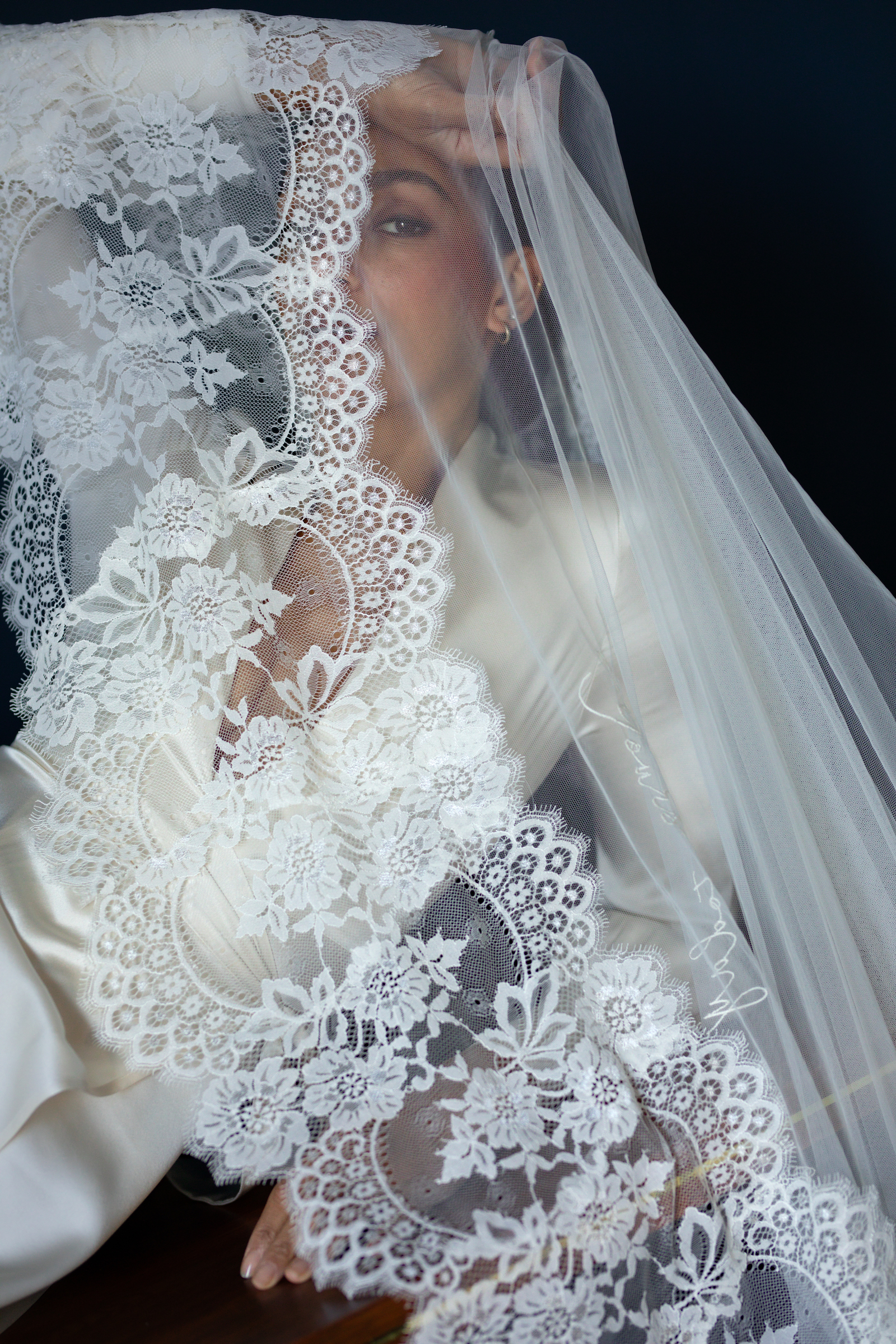
Photographer credit: Eleanor Bryant
About the blogger
Rebecca Anne is the founder and designer behind Rebecca Anne Designs, a Devon studio specialising in personalised embroidered wedding veils. With more than 15 years’ experience in the wedding industry and over a decade designing veils, Rebecca works one-to-one with brides in the UK and worldwide, turning personal stories and individual bridal style into embroidery designed especially for each veil.

0 Comments