A guest post for English-Wedding.com from Bespoke Diamonds
When a newly engaged couple visits Bespoke Diamonds for wedding bands, the first question they ask is: “How do we make sure the two rings actually work together?”
A well-paired set looks seamless in photographs, feels comfortable in daily life, and—most importantly—tells one cohesive love-story on your hand. Follow the five design pillars below and your engagement ring and wedding band will complement each other perfectly for decades to come.

1. Balance the Proportions
Width is where most mismatches happen. If your engagement-ring shank is 2 mm wide, keep the wedding band between 1.8 mm and 2.2 mm. A band that is too chunky competes for attention; one that is too thin can twist underneath and wear faster.
Depth matters too. Engagement rings have a high cathedral gallery, a paper-thin band will sit lower and rub the inside of the claws. Matching depth ensures both rings age evenly when you have them polished every anniversary.
Quick test: place a sample band against your ring and make a fist. If the band disappears under the setting, it’s probably too narrow. If it overwhelms the shoulders, scale down.
2. Marry Your Metals – or Contrast on Purpose
For a timeless, bridal-magazine look, keep both rings in the same alloy and colour: platinum with platinum, 18 k yellow gold with yellow gold. Identical composition means they will develop patina at the same pace and can be polished together each year.
If you adore mixed-metal trends, contrast boldly and intentionally. For example, a platinum solitaire pairs beautifully with a slim yellow-gold pavé band; the cool-warm contrast frames the diamond without looking accidental. Browse our curated ?wedding rings? gallery and you’ll notice mixed-metal sets always share one unifying detail—either diamond size, bead-set style, or milgrain edging—to keep the look cohesive.

3. Echo the Stone Shape for Harmony
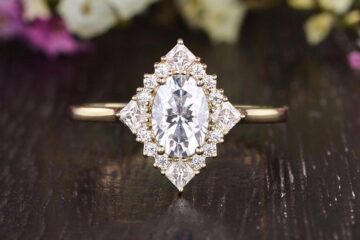
Think of the centre stone as the headline and the band as the supporting caption. An ?oval diamond? loves gently curved or scalloped bands that follow its elongated outline, while an emerald-cut or princess-cut diamond comes alive beside a straight, channel-set band that mirrors crisp geometry.
If your engagement ring is a floral cluster or halo, try a plain metal band that lets the centre design breathe. Conversely, a minimalist solitaire can welcome a richly pavéd band to bring extra sparkle. The common theme: let one element lead and the other complement.

4. Mind the Profile and Setting Height
Cathedral shoulders, large under-galleries or prominent halo edges can create gaps. A notched or contour band is the elegant solution; our CAD software maps the exact overhang and shapes a “bite” so the two rings lock together like puzzle pieces. During a bespoke design session, we show 3-D renders before casting so you can approve every angle.
Prefer a flush fit with no special shaping? Ask your jeweller to raise the centre stone just 0.5 mm higher during the make; that tiny lift often allows a straight band to sit flush without altering the look from above.
5. Future-Proof for Stacking
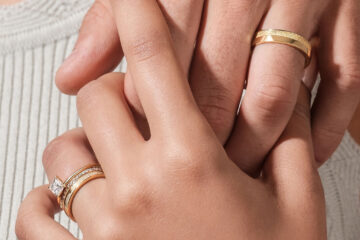
Many couples plan to add an eternity ring for a first anniversary or milestone birthday. Choose a wedding band no thicker than 2 mm and keep prongs sleek so room remains for a third ring. If ethical sourcing matters, accent your stack with ?lab-grown diamonds—they match mined stones in brilliance but leave space in the budget for celebrations down the line.

Ready to Create the Perfect Match?
Book a private consultation in our Dublin showroom and let our designers unite your engagement ring with its ideal wedding-ring partner. With expert proportions, harmonious metal choices and future-stack planning, you’ll walk down the aisle wearing a duo that feels like it was always meant to be.
https://www.bespokediamonds.ie
A guest article by Bespoke Diamonds (Dublin) for English Wedding
Timeless Style, Lifelong Meaning
When you picture the perfect engagement ring, chances are you imagine something that looks as beautiful on your golden wedding anniversary as it does the day you propose. Trends come and go, but classic craftsmanship, high-quality diamonds and thoughtful design last forever. At Bespoke Diamonds, we have helped thousands of couples in Ireland choose rings that feel personal today yet timeless tomorrow. Here’s how to ensure your forever piece never dates.
1 · Keep the Silhouette Simple
The easiest route to longevity is a clean silhouette. A single diamond in a perfectly balanced four- or six-prong setting will always feel current. Our solitaire engagement rings are deliberately understated so the eye focuses on the stone’s natural fire. Choose a slender platinum band to highlight crisp whiteness or warm 18 k yellow gold for a traditional glow.

2 · Choose Enduring Diamond Shapes
Round brilliants dominate the history books, but several other cuts have earned permanent status. An oval diamond offers the same 58 facets as a round, with a graceful elongation that flatters every hand. Emerald-cut diamonds, with their hall-of-mirrors flashes, have graced style icons from Grace Kelly to Beyoncé. Whichever shape you favour, insist on excellent symmetry and polish; precision never ages.

3 · Invest in Metals That Mature Beautifully
Metals set the mood of a ring and influence future maintenance. Platinum is prized for strength and a naturally bright colour that will not yellow with time. Yellow gold ages gracefully, developing a subtle patina that many couples love. Matching your chosen metal to your future wedding rings creates a seamless set you will enjoy wearing every day.
4 · Embrace Modern Ethics Without Losing Tradition
Timeless doesn’t have to mean old-fashioned mining practices. Many modern couples opt for lab-grown diamonds – chemically identical to mined stones, traceable, and often kinder to your budget. Selecting a laboratory-created diamond in a classic design lets you honour tradition and ethics at once.
5 · Personalise Subtly for Sentimental Value
Engraving a meaningful date inside the shank or hiding a tiny coloured gem on the gallery are ways to make a timeless ring uniquely yours without affecting its clean aesthetic. Our bespoke team can discreetly add such touches during manufacture or even incorporate heirloom gold into a new setting.

The Bespoke Diamonds Difference
Every Bespoke Diamonds piece is built to last:
- Expert gem selection – only independently graded diamonds with excellent cut quality.
- Precise CAD design – ensuring claws, shoulders and galleries remain elegant yet durable.
- Hand finishing in Dublin – our goldsmiths polish and check every claw under magnification before delivery.
Your Forever Starts Here
If you want a ring that looks as flawless in 2055 as it does in 2025, book a private consultation at Bespoke Diamonds. We will guide you through classic designs, metal choices and diamond options until you find (or create) the piece that tells your love story – beautifully, eternally, timelessly.
Wedding couples can now head to the Kent countryside to make their own wedding rings
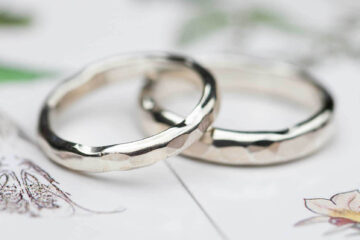
Want to make everlasting memories as well as making your very own wedding rings? Even with no previous experience you can make beautiful wedding rings in Shoreham under the expert guidance of Elizabeth Anne Norris.

Take some time out from wedding planning in a rural setting, just a short hop from the city.
Spend a fun-filled afternoon on a picturesque Victorian Dairy Farm creating your own wedding rings together.
Do something completely different to walking into a shop and buying generic wedding rings.
Create unique wedding rings as well as lasting memories that you can treasure forever.
Enjoy this unique experience in Kent and make your own special rings.
With English Wedding member Elizabeth Anne Norris Jewellery.

Laura and Matthew said in October 2023 “We had the most amazing afternoon making our wedding rings together with Elizabeth. We felt so at ease and welcome, and the instruction and assistance she provides when you are making your rings is exceptional. She even got us our favourite biscuits to snack on while we worked. We are over the moon with our rings and would recommend to anyone considering making your own.”

In this half day workshop you will:
1. Be guided step by step to make your wedding rings according to your designs (discussed and decided prior to your arrival)
2. Be supported by expert jeweller and teacher Elizabeth who can check your progress at every stage and rest assured she can fix any mistakes (doubtful she’ll let that happen though!)
3. Learn traditional jewellery making techniques in a fun relaxed atmosphere.
4. Spend quality time with your partner, having fun and making wonderful memories as part of your wedding planning process.
5. Take away your bespoke rings that you made at the end of the day.
6. Celebrate with your goodie bag containing champagne, handmade chocolates and discount vouchers.

Included in this workshop is a:
* 30 minute telephone consultation about your rings
* 4 hour workshop
* Celebratory goodie bag including champagne & chocolates
* Step by step tuition showing you how to create your wedding rings to your design
* One ring resizing within 12 months of your workshop (if necessary)
* £430 + cost of materials

A few words from Elizabeth:
“I have been designing handmade jewellery since 1999 and have made over 1000 rings. More recently, I’ve helped 100s of couples create their own wedding rings. It is my absolute pleasure to offer you this special experience to get hands on and make your wedding rings”.
As an introductory time limited offer, enjoy £50 off selected wedding ring workshop dates. For this and more information head to www.eanjewellery.com

While we love a simple, contemporary engagement ring, there’s nothing quite like a vintage inspired sparkler to evoke the true romantic in all of us! If you love all things antique and are looking for something a little bit different, here’s our simple guide to some of the different eras.
While rings in many guises have been exchanged between couples as a sign of engagement and betrothal for centuries, many jewellery designers refer back to various design trends from the last 150 years. And each era has its own distinctive features that reflect the popular styles of the day. From traditional, classic engagement rings, to more ornate pieces – these enduring styles conjure up images of elegant, romantic times. There’s just something so magical about these vintage designs!
Georgian & Regency, 1714-1830, Kings George I, II, III and IV
Diamonds, pearls, rubies, garnets and sapphires were the favourite stones of the Georgians and when it comes to metals, they preferred silver to gold. We often associate symmetrical architecture with the Georgians and this is also reflected in their jewellery. They were heavily inspired by nature and often incorporated intricate shapes and interesting gemstone cuts. They are famed for inventing the ‘halo’ style – where smaller stones frame a larger gem – and this is still one of the best-selling engagement ring styles.
Victorian 1837-1901, Queen Victoria
Victorian jewellery went through three notable periods – romantic, grand and aesthetic. Modern Victorians also loved nature and this inspired them to create intricate floral and leaf designs out of metalwork. When it comes to gems, they incorporated pearls, ivory, tortoiseshell, coral, onyx, amber and quartz – alongside the more traditional diamonds and other precious stones. The styles were heavily symbolic and romantic, with rose cut, old mine cut and marquise cut stones. The era is also known for meaningful mourning jewellery, where an item of jewellery is worn in memory of a lost loved one, with some including a lock of hair or a personalised motto.
Edwardian 1901-1910, King Edward VII
Europe refers to this era as ‘La Belle Epoque’– the beautiful era – and this is reflected in the jewellery of the day. The upper classes, including the King, had a huge influence on the styles and showing off their luxury and wealth. Jewellery became more elaborate and showy as they embraced new techniques for jewellery making larger, lavish pieces influenced by the Arts & Crafts movement. They embraced floral designs with loved ornate delicate details and intricate lace-like filigree. They used a lot of silver and white, with platinum, silver, pearls and diamonds. Pearls were a real status symbol of the day and we’re used to create light, ethereal styles.
Art-Deco, 1919-1939, George V
The art-deco movement came in with a bang off the back of the austerity of WWI. The distinctive style, covering the 1920s and 30s, features geometric patterns and abstract designs, often created from white gold and platinum. Art-deco styles travelled around the world with fabulous architecture and fashion – with engagement rings often feature bold patterns made from straight lines, triangles, pyramids and arcs with contrasting coloured gems. These flamboyant designs are so stunning they remain a firm favourite for engagement rings today.
Modern Vintage
When it comes to choosing your dream engagement ring, we believe you should always go with your heart and pick a style you love above all others – don’t go for trends. Vintage styles have proved again and again that they stand-the-test-of-time, so our advice is to avoid anything that’s too fashionable. Our dedicated Heritage and Vintage engagement rings and collections are bursting with stunning antique inspired rings – where you’ll find a ring that will never go out of style!
Buying your engagement ring is one of the most exciting purchases of your life, but some of the technical descriptions can be a bit confusing – unless you’re a jeweller! While some are obvious, others are harder to work out so, Emmeline Smith from Infinity Diamond Jewellery shares her quick guide to help get you up to speed with the basics.
The main parts of a ring

Shank or band – is simply the part of the ring that wraps around your finger, in any metal and is the part that will bear any hallmark.
Side stones – also referred to as ‘accent stones’ and are usually smaller gems set either side of the centre stone. They can be the same or different type of gem, in any cut or size to complement and draw attention to the main stone and add a bit of extra dazzle!

Centre stone – is quite self explanatory! It’s the main and usually the biggest stone in the ring.

Head – situated at the top of the ring, the head holds the centre stone in place. There are various different styles and the one you pick will make a big difference to the appearance of the ring.

Engagement Rings
Prongs – also referred to as ‘claws’, these are situated on the head of the ring and are the thin metal strips that hold the gem in place. The amount of prongs varies are usually 4 or 6 and the ends are slightly bent inwards to securely hold the stone.

Shoulders – these are the top two sides of the band, just below the stones. Some shoulders change width as they near the stone setting. They can be super simple or intricate, adorned in stones.

Engagement Rings
Other useful terms
Mount or setting – The setting or mounting refers to how the gems are set onto the metal band.

Oval cut, art nouveau style lab-diamond engagement ring – prong setting
Split shank – is when the shank of the ring divides at the shoulders as it approaches the centre stone. The split leaves a visible gap and can give the illusion that the centre stone is bigger than it is.

Asscher cut, moissanite engagement ring, with split shank
Bezel – in a full bezel setting, the centre stone is set within a thin metal rim, which completely surrounds the stone, holding it in place. A partial-bezel setting covers just two sides of the stone.

Oval cut, three stone moissanite bezel engagement ring
Pavé (or micro-pavé) – this is French word for paved and means the surface of jewellery is literally paved with a series of small gems set close together, totally covering the metal below. This ensures the optimum opportunity for sparkle, ensuring every surface glimmers.

Round cut, moissanite engagement ring with Pavé band
Halo – is a ring, or border of smaller stones around the outside of the main stone, forming a ‘halo’. Not only are they super sparkly, but if it’s the same colour as the main stone, it gives the illusion of it being bigger, while if it’s a different colour, it draws the eye to the centre stone – a stunning and timeless feature.

Round cut, moissanite engagement ring with halo // Lab-grown ruby engagement ring with halo
Hidden halo – similar to above, a hidden halo’s a frame of smaller stones, but they aren’t instantly noticeable when looking at the ring from the top. The circle of gems are set around the base of the main stone, visible when viewing the ring from the side.

Pear cut moissanite engagement ring with hidden halo
Solitaire – as the name suggests, this ring contains a single gemstone of any cut. A solitaire ring is the most classic and timeless engagement ring style.

Round cut solitaire, lab-diamond engagement ring
Channel – stones are set inside a channel of metal, so they’re flush and not protruding, giving a smooth and clean finish. Channels are particularly popular for wedding bands.

Moissanite engagement ring, with channel set shoulders
Tiffany-style setting – characteristics include simple prongs that hold the main stone in place. The prongs use less metal, covering less of the gem, exposing more of the diamond and allowing more light to enter and exit the stone, which results in maximum sparkle.

Round cut moissanite engagement ring, Tiffany-style setting
Milgrain – is a metalwork technique of small bumps, creating a patterned border. Milgrain is a popular design feature on both engagement and wedding rings and adds a lovely finish.

Oval cut lab-diamond engagement ring with milgrain edge