ADHD, wedding photography, and me – by Dannie at Blotted Ink Photography
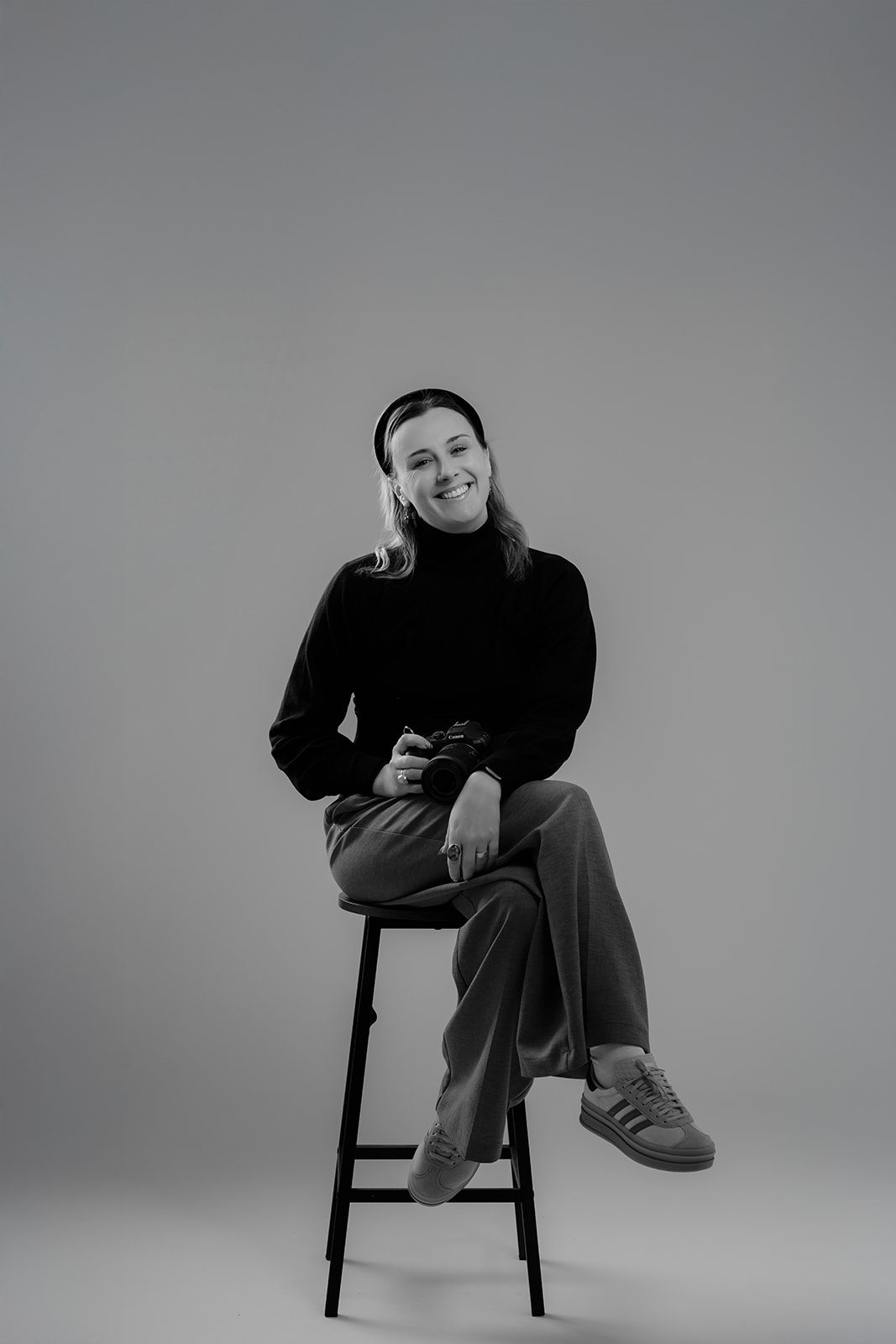
I’m really conscious I need to introduce today’s guest article with care, but I’ve been bursting to share this wonderful piece of writing with you. Lovely Dannie from Blotted Ink Photography in Devon shared her very personal story with me a little while ago, and a ten minute phone call evolved into this insightful piece about neurodivergence from a wedding supplier’s perspective. I know there are many wedding professionals who will relate to this story, as I do. My own stepson and nephew are two of the most amazing neurodivergent people – so Dannie’s experience and openness around her experience in the wedding industry feels like a very precious and wonderful thing to share with you. If you don’t have a cuppa already, go make one – because I read this piece three times in a row and I think you might too. And Dannie – thank you, from the bottom of my heart, for such a beautifully written article.
1. 2025: the year everything clicked
2025 was the year I received my ADHD diagnosis — and it was also the year I started my photography business. Those two things aren’t separate. In many ways, they explain each other. At 35 I discovered two key truths about myself – one, that I am neurospicy and two, I need to do something creative for a living to feel at all fulfilled.
I’d spent the entirety of my life questioning why my brain was the way it was. Why everything felt more difficult, why I found social situations so draining, why I didn’t think like the other people around me. When I was exploring my own childrens’ diagnoses, was when I started to see the patterns in myself.
For most of my working life, I struggled to hold down jobs in a way that never quite made sense to me. I was capable, creative, hardworking and yet I would feel like I was constantly swimming upstream, on the verge of burnout. I’d doubt myself constantly, ask questions I already knew the answers to. Eventually I would leave, move onto the next with itchy feet. Without understanding how my brain worked, I internalised that as a personal failure rather than a structural mismatch. I didn’t know I was navigating work with an undiagnosed neurodivergent brain – I just knew that everything always felt harder than it should.
One of the patterns I recognise now is how much I relied on instant success or quick wins to keep going. When something felt new or rewarding straight away, I could pour everything into it. When progress was slower, quieter, or less visible, doubt would creep in and eventually I’d walk away. At the time, that felt like giving up. Now, I understand it as a nervous system searching for safety, motivation, and reassurance.
Getting my diagnosis didn’t magically fix any of this, but it gave me something I’d never had before: context. Compassion. Language. Instead of asking myself why I couldn’t just push through, I began asking what I actually needed to stay. And for the first time, I stopped quitting at the point where things got uncomfortable or where success wasn’t immediate.
Going through University in my mid-thirties with two small children felt like the precursor to this. For the first time I felt energised, eager to learn, I was meeting challenges rather than being defeated by them. It signalled to me that photography was my way forward. Am I technically the most adept? Probably not – the numbers confuse the life out of me. But am I passionate, in love with creating the most beautiful, fun, vibrant photos ever? I sure am!
Starting my business in the same year as my diagnosis has meant doing things differently. I’m learning to sit with slow growth. To trust the process over adrenaline. To keep showing up even when the momentum dips or the validation is quiet. That alone feels like a small but radical act — and it’s changed not just how I work, but how I see myself within my work.
2. How a neurodivergent brain shapes the way I photograph weddings
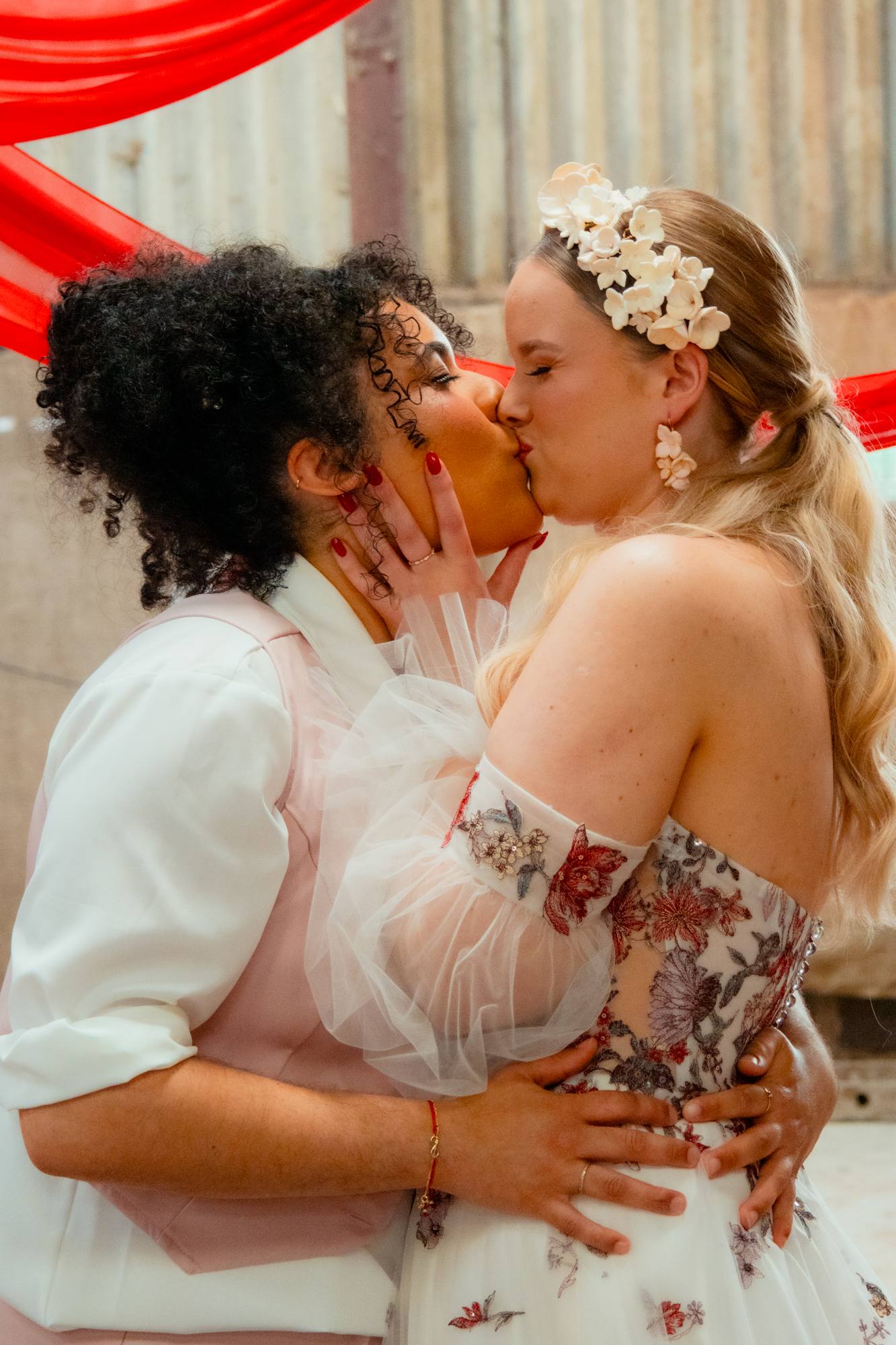
Understanding my neurodivergence has also helped me understand my photography. The way I work on a wedding day; what I notice, how I move through a space, the moments I’m drawn to are directly shaped by how my brain works. My little neurospicy grey matter sees things in its own unique way.
I’m deeply attuned to atmosphere and emotion. I notice those moments of quiet love – a cuddle between parents and children, a hand reaching out, a deep embrace. I am drawn to laughter, I love capturing someone who is so lost in their laughter they don’t care about the camera. And I always shed a little tear during a ceremony, and my lens is drawn to the emotions in the room – pride, overwhelming joy, a glance between bridesmaids.
This sensitivity means I photograph weddings in a way that prioritises feeling over performance. I’m less interested in perfect presentation and more interested in what’s real — the nervous hands, the deep breaths, the glances that say more than words. My neurodivergent brain doesn’t just see what’s happening; it feels it. For couples, my hope is that this means feeling less watched and more held. Less pressure to perform, and more freedom to simply be and to enjoy the day together.
3. A note on my own wedding day
I want to briefly acknowledge my own wedding day here, because it has quietly shaped how I approach weddings now.
My wedding wasn’t particularly safe, quiet, or authentic to who I was at the time. I moved through it doing what I thought I was supposed to do, rather than what I actually needed. I remember feeling overwhelmed more than grounded, and disconnected rather than truly present. At the time, I didn’t have the language or self-trust to ask for something different.
My wedding day wasn’t necessarily what I wanted to choose, but I wasn’t able to express otherwise.
Looking back with the understanding I have now, I can see how much my nervous system was asking for care and how little space there was for that. That experience didn’t ruin weddings for me, or even ruin the day for me, but it did give me a deep, embodied understanding of how easily people can feel lost inside a day that’s meant to celebrate them.
That’s why I will always be a safe space for couples – and guests – to be able to ask for a moment, or for us to just take a walk, to be able to use me as a way to quietly escape for a breather when things feel a bit much.
That awareness sits quietly underneath everything I do now.
4. A love letter to neurodivergent couples
If you’re a neurodivergent couple planning a wedding, I want you to know this: you’re allowed to do it your way.
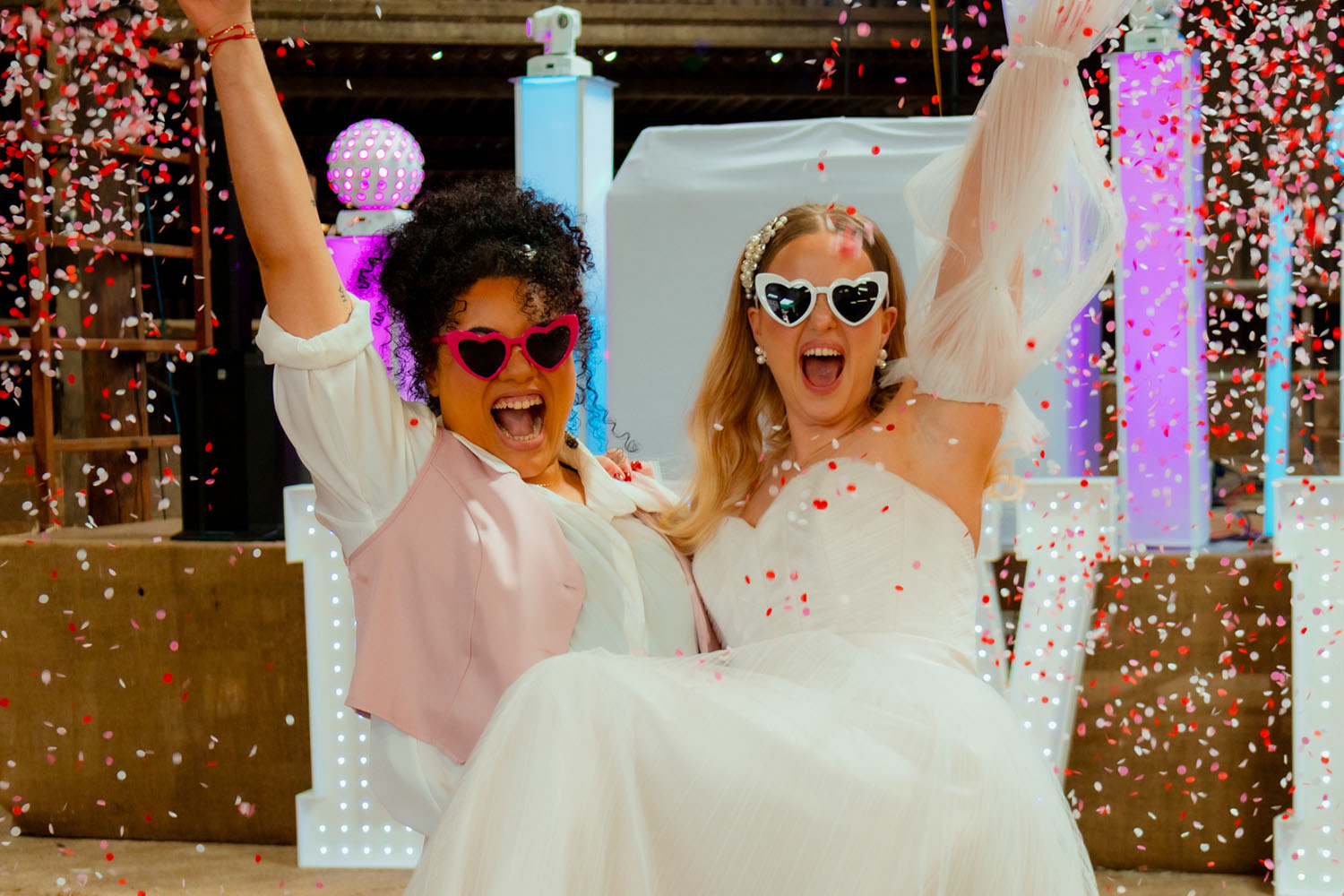
You’re allowed to want quiet. You’re allowed to want colour, creativity, softness, structure, or something completely unconventional. You’re allowed to skip traditions that don’t feel like you, to build a day that works with your nervous systems rather than against them. There is no rule that says a wedding has to look a certain way to be meaningful.
Whether that means a small guest list, an elopement, a non-traditional timeline, wearing an outfit that feels entirely comfortable for you, sensory-friendly choices, or plenty of space to breathe – your wedding is allowed to be personal. It’s allowed to feel calm. It’s allowed to feel joyful without being overwhelming. Most of all, it’s allowed to reflect who you both actually are, not who you think you’re supposed to be for that day.
4. Rejection Sensitivity Dysphoria and navigating the wedding industry
What RSD is
Rejection Sensitivity Dysphoria (RSD) is something many neurodivergent people experience. It’s an intense emotional response to perceived rejection or criticism — often immediate, overwhelming, and deeply physical. It isn’t about being fragile or unprofessional, and it isn’t something you can simply logic your way out of.
For those of us who experience it, rejection doesn’t just feel disappointing. It can feel painful, all-consuming, and impossible to ignore; even when we intellectually understand that it isn’t personal. The emotional response arrives first; understanding tends to come much later.
RSD in a “being chosen” industry
The wedding industry is built on being chosen – and not being chosen. Enquiries don’t always convert. Messages go unanswered. Applications are rejected silently. Comparison is constant, particularly online.
Navigating this landscape with RSD can be exhausting. Silence can feel louder than a no. A lack of feedback can spiral into self-doubt. And yet, the work still asks you to keep showing up, to keep sharing something deeply personal, and to keep believing in your value even when the response is quiet.
Why sensitivity also deepens my work
That same sensitivity is also what makes me a more empathetic photographer. It means I prepare carefully, communicate thoughtfully, and check in often. I notice when someone is overwhelmed, anxious, or unsure, and I adjust without making it a big thing.
For couples, this often translates into feeling emotionally safe and not having to explain or justify their nerves, their quietness, or their need for space. For fellow suppliers, it’s a reminder that clarity and kindness matter. That honest communication is far gentler than silence, and that small acts of consideration can make a significant difference.
I don’t expect others to manage my RSD for me. But I do believe that awareness changes how we treat one another. Clear communication is kind. Compassion costs nothing. And in an industry that relies so heavily on emotional labour, care goes a very long way.
5. Building a business that fits my brain
Receiving my diagnosis allowed me to stop trying to force myself into systems that were never designed for me. Instead, I’m building a business that works with my brain — one rooted in empathy, creativity, flexibility, and honesty.
Photographing weddings this way feels ethical and gentle. It allows space for difference, softness, and individuality. It prioritises people over performance, and experience over expectation. It also reminds me, constantly, that there is no single right way to work, to love, or to celebrate.
This business exists because I finally trusted myself enough to continue – even when growth was slow (and it still is, we’re running a marathon here, not a sprint), even when validation was quiet, and even when doubt crept in. And for me, that feels like the most meaningful success of all.
Colourful + Candid Wedding Photography in Devon for Unconventional Couples by Blotted Ink Photography
Find me at https://www.blottedinkphotography.co.uk
0 Comments